A plastic cup can hold a cold drink without any obvious problem. Add a lot of ice, however, and the situation changes.
Think about a takeaway iced coffee. The cup is filled quickly, ice cubes are dropped in, the lid is pressed onto the rim, and the drink may then spend 20 or 30 minutes in a delivery bag. During that time, someone will pick it up, squeeze the side of the cup, move it around, and eventually drink from it.
That is a very different job from simply holding a cold liquid.
For a custom plastic cup manufacturer for beverage businesses, this difference is important when developing cups for iced coffee, juice, soft drinks, smoothies, and similar products.
Ice Puts More Stress on the Cup

The first thing buyers tend to notice is temperature. Ice makes the drink colder, but temperature is not the only change.
Ice also has weight and physical movement. Large cubes can hit the bottom or sidewall while the cup is being filled. Once the drink is on the move, the ice shifts inside the cup. If the cup is squeezed at the same time, the sidewall has to deal with that movement while maintaining its shape.
This becomes more noticeable when the cup contains a high proportion of ice.
A cup that feels perfectly rigid with liquid alone may feel softer once it is heavily iced. That does not automatically mean the cup is defective. The more useful question is whether the amount of movement or deformation is acceptable for the intended application.
Material Choice Should Follow the Drink

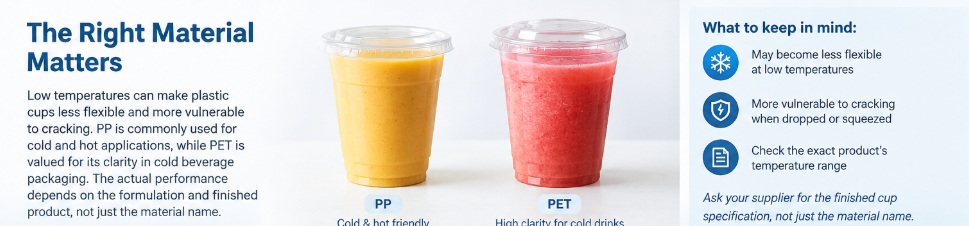
There is no single plastic that is automatically the right choice for every iced beverage.
A clear cup for iced coffee may have different requirements from a cup used for a smoothie or a large soft drink. Appearance may matter more in one application, while impact resistance or flexibility may be more important in another.
When a buyer is sourcing PET plastic cups for takeaway drinks, for example, the discussion should include more than capacity and transparency. How much ice will normally be added? What type of lid will be used? Will the cups be carried individually or packed into delivery bags?
Those details give a plastic cup supplier for cold beverage service a much better basis for recommending a construction.
A Thicker Wall Is Not Always the Answer
It is easy to assume that a thicker wall will solve a weak-cup problem. Sometimes it helps. It is not necessarily the first thing that should be changed.
Cup geometry can have a surprisingly large effect on how a cup feels in the hand. The shape of the sidewall, the transition into the base, the rim and even the taper of the cup can influence rigidity.
This is why an OEM plastic cup factory for foodservice packaging will often need to look at the complete design rather than only increasing material thickness.
There is also a commercial consideration. Adding material increases weight, which can affect unit cost and shipping. If a change in geometry can provide the required performance without simply making the entire wall thicker, it may be the more practical solution for a high-volume program.
Watch the Rim When the Cup Is Squeezed
The rim deserves particular attention because it connects the cup to the lid.
Imagine a customer picking up a large iced drink with one hand. The side of the cup is squeezed slightly. The body may recover immediately, but even a small change around the rim can affect how the lid sits.
For takeaway drinks, that matters.
A cup can look fine on the outside and still have a poor cup-and-lid fit. Leakage may then appear during carrying or delivery rather than during the original filling operation.
For this reason, wholesale plastic cup suppliers for takeaway beverage programs should evaluate the matching lid rather than approving the cup body separately.
A good sample test should include the actual lid that will be used in production.
The Type of Ice Makes a Difference
“Iced drink” is still a fairly broad description.
Large cubes behave differently from crushed ice. Nugget ice can fill much of the available space and move around as the drink is carried. Crushed ice can produce a very different ice-to-liquid ratio from a few large cubes.
The filling process matters too. Ice added aggressively to an empty cup creates a different impact from ice added gradually after the beverage has been poured.
For a commercial plastic cup manufacturer for coffee shops, knowing these details can make sample development much more useful. A 20 oz cup designed around a moderate amount of large ice may not be the best starting point for a drink that is almost completely packed with crushed ice.
Test the Cup With Ice, Not Just Cold Water

This is one of the simplest checks a buyer can make before approving a large order.
Use the actual drink, or something close enough to reproduce its filling conditions. Add the expected amount and type of ice. Put on the production lid and handle the cup in the way customers normally will.
Pick it up. Squeeze it lightly. Carry it in a delivery bag. Turn it around. Leave it standing for a while.
Look at the sidewall, bottom and rim. Check whether the lid remains secure and whether the cup still feels comfortable to handle.
For an ODM plastic cup supplier for foodservice packaging, these tests also provide useful feedback during sample development. If the cup feels too flexible, leaks around the lid, or becomes unstable when heavily iced, the next step can be based on an actual problem rather than guesswork.
Give the Manufacturer More Than a Cup Size
“24 oz clear plastic cup” is a starting point, not a complete specification.
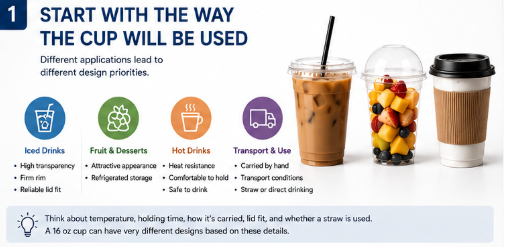
A manufacturer will usually make better recommendations if the buyer explains what the cup is going to do. The beverage, ice type, approximate ice ratio, lid style, filling method and distribution environment all help define the application.
For example, a cup intended for a busy coffee shop may be filled, lidded and handed directly to customers. Another cup may spend half an hour in delivery before reaching the customer. Both could be 24 oz cups, but their practical requirements are not identical.
A plastic cup manufacturer for bulk beverage orders can work much more effectively when those operating conditions are known before the design is finalized.
Do Not Judge the Cup by Rigidity Alone
A very rigid cup is not automatically a better cup.
The cup still needs to balance material use, appearance, handling, stacking, lid compatibility and cost. Some applications may benefit from a little flexibility rather than a hard, brittle feel.
The important point is consistency. If the cup is repeatedly squeezed, packed with ice, closed with a lid and transported, it should behave predictably throughout that process.
For companies buying bulk plastic cups for iced beverage service, that is more useful than comparing specifications on paper without testing the actual application.
Match the Cup to the Way It Will Be Used
Ice does not simply make a plastic cup colder. It changes the physical conditions inside and around the cup.
The right choice depends on what is being served, how much ice is used, how the cup is filled, which lid is attached, and what happens after the drink leaves the counter.
For buyers working with a custom plastic cup supplier for high-volume beverage programs, the most useful approach is therefore to test the complete packaging combination under realistic conditions.
The goal is not to find the thickest cup or the most rigid material. It is to find a cup that continues to hold its shape, keep the lid secure and remain practical to handle when the ice, drink and distribution conditions match everyday use.