Industries We Serve
Packaging Built Around How Your Channel Sells Food
Six food channels move product in completely different ways. Find yours below and you'll see the product line, the food-grade resin and the typical run we build for it.
How this page reads
Each Channel, Read Four Ways
Pick a section below and it follows the same order: the packaging problem that channel hits, the product line that answers it, the food-grade material that fits, and the typical order we run. Tap each card to see a quick example.
-
01 The packaging problem
e.g. a chain menu runs hot and cold at the same counter and every store must plate it identically.
-
02 Product line
The container family that answers it — see our product lines.
-
03 Food-grade material
The resin that fits the temperature and shelf life — PP, MFPP, PET food-grade options.
-
04 Typical order
The run we usually make — hot mains, branded lids, multi-store reorders.
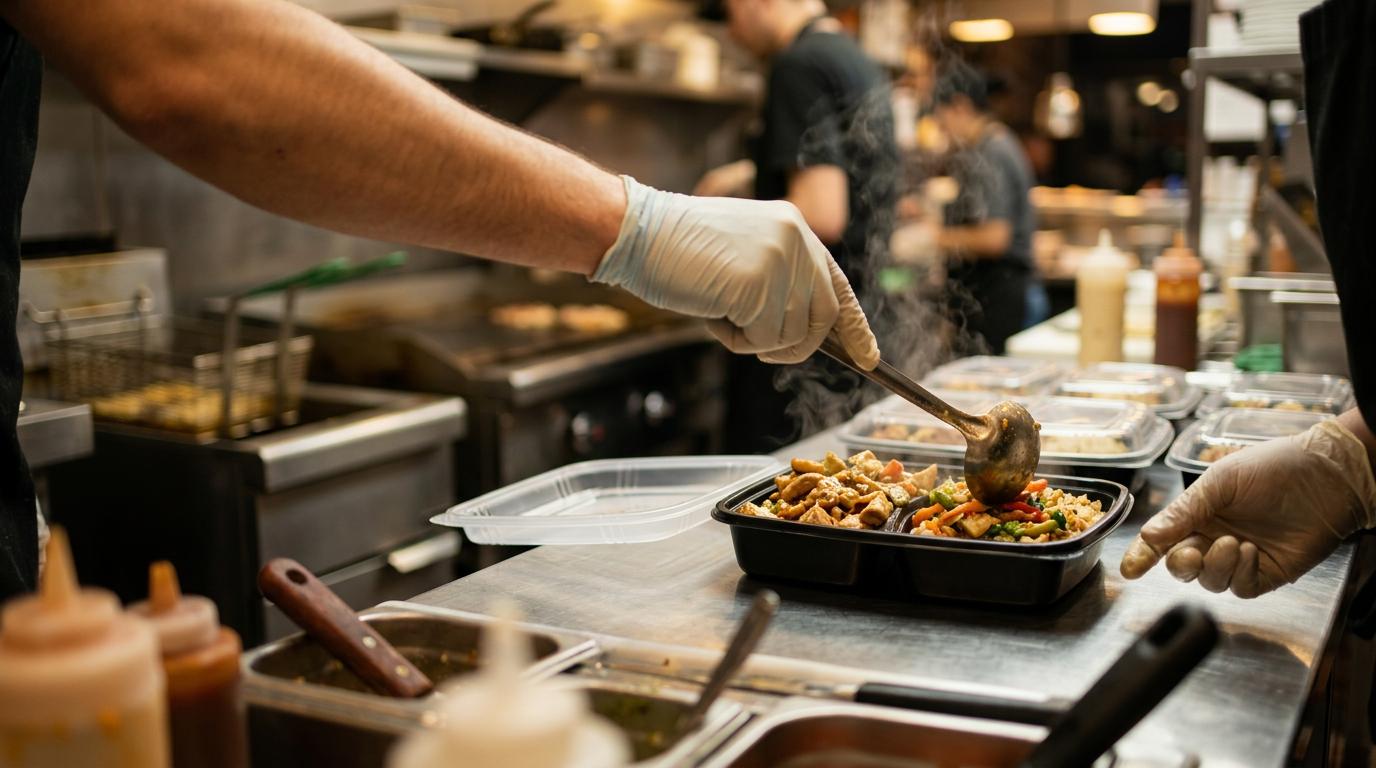
Multi-store consistency
Restaurant Chains
A chain menu runs hot and cold at the same counter, and every location has to plate it the same way. The pack has to hold a hot main and a chilled side, carry one printed brand across stores, and keep its spec from the first annual order through the reorder a year later.
Typical order
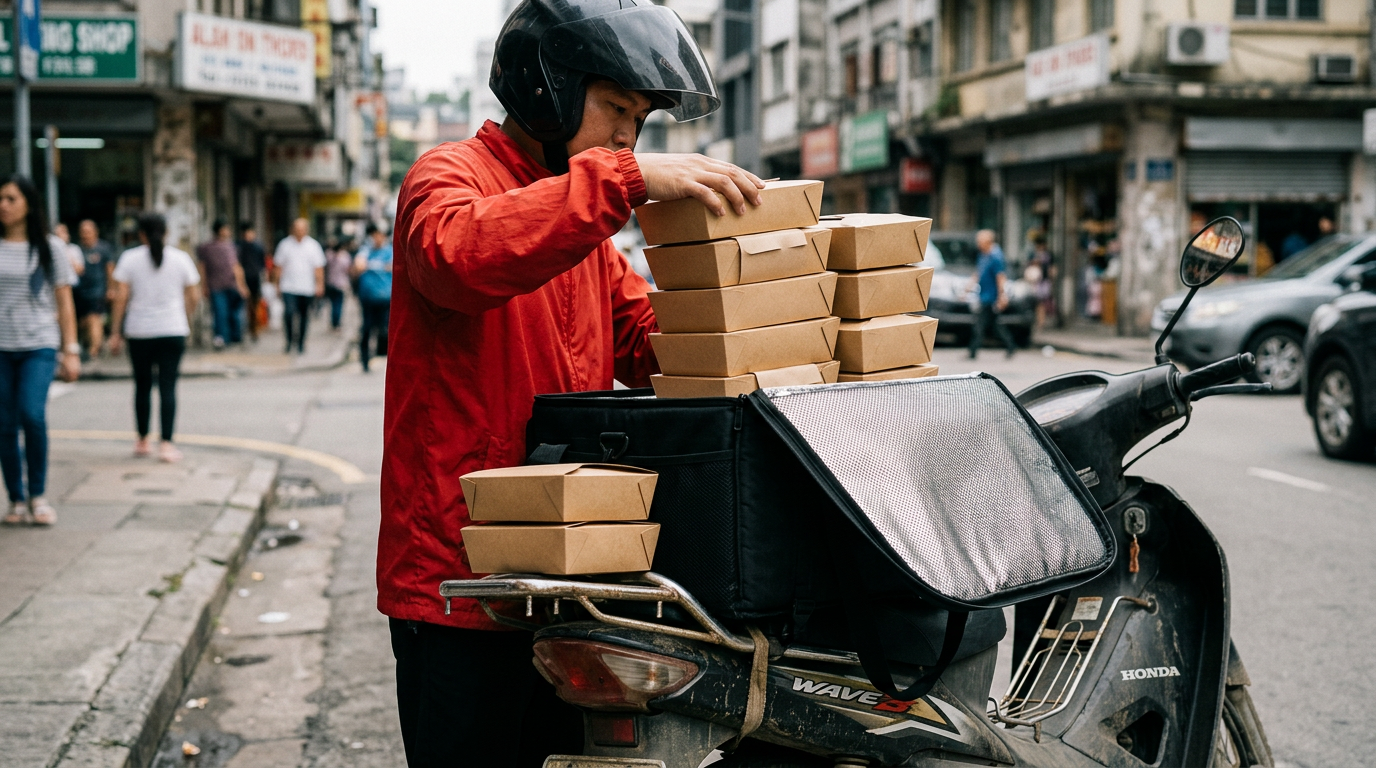
Built to travel
Food Delivery Platforms & Cloud Kitchens
Once an order leaves the kitchen it gets stacked in a bag, driven across town and opened on a desk. Lids have to stay shut over every pothole, broth and sauce cannot seep into the bag, and a cloud kitchen running several brands needs formats that stack flat and fill fast on one line.
Typical order
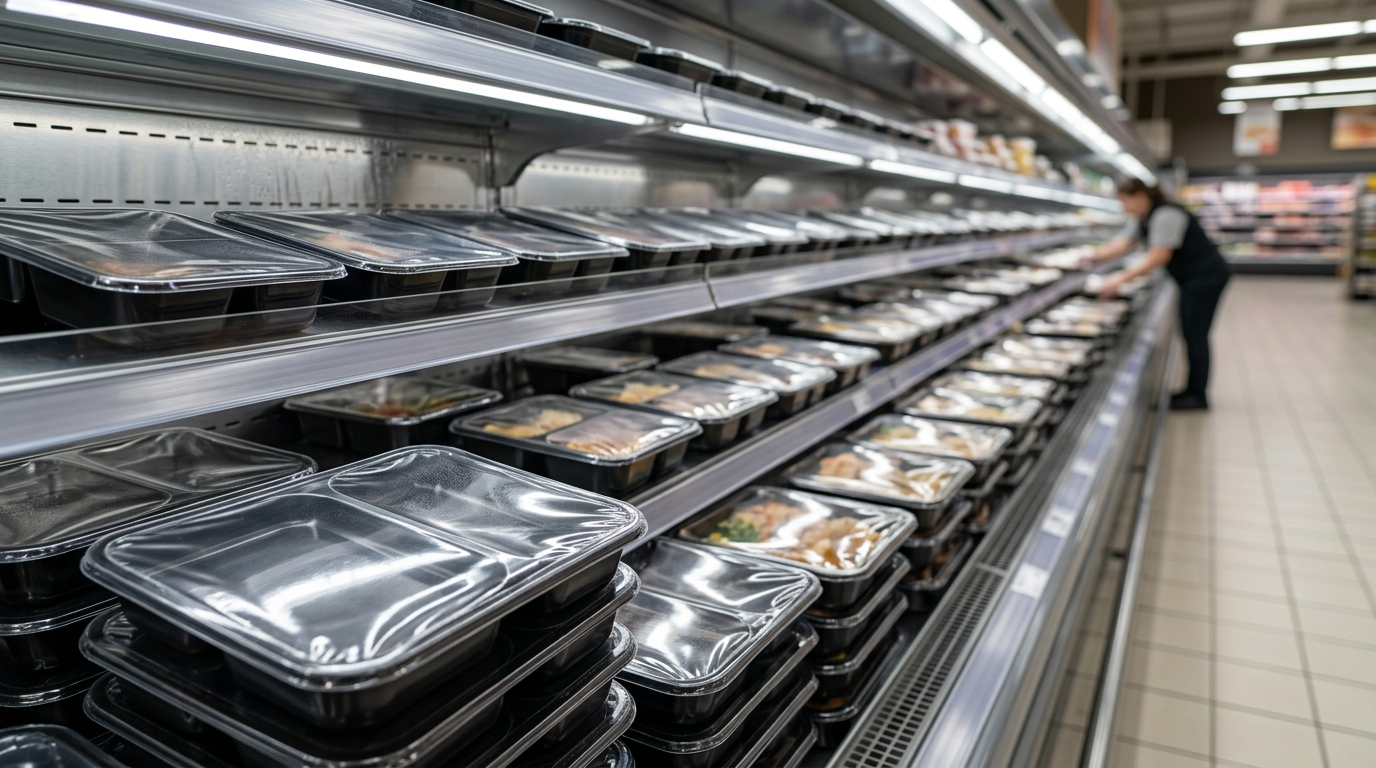
Shelf & cold-chain
Supermarket Procurement
Retail packaging is judged on the shelf and again at the till. Trays have to sit inside fixed fixture depths, take a date label cleanly, and hold through the cold chain without fogging or cracking. In the ready-meal aisle the same pack has to move from a chilled cabinet to a home oven.
Typical order
Portion & private-label
Meal Prep & DTC Brands
A subscription box lives in a fridge for a week, gets microwaved several times, then ships in a carton without rattling loose. These brands need portion-controlled compartments, a clean face for private-label print, and a tray footprint that fits both a fridge shelf and a shipping mailer.
Typical order
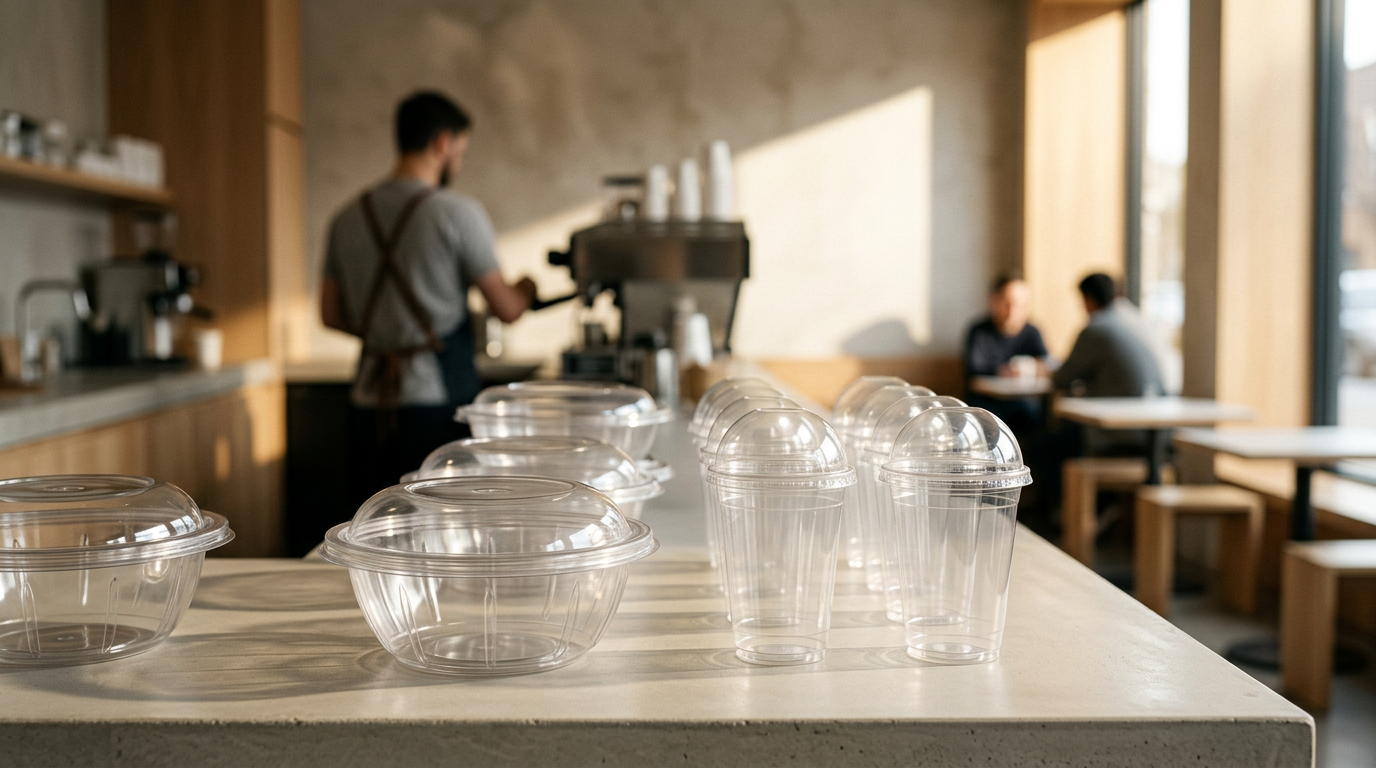
Sells through the lid
Bakery & Dessert
Dessert sells through the lid, so the pack has to be clear enough to show frosting and tall enough not to touch it. Cakes and pastries bruise easily, and a boutique counter still wants packs that fold flat in the stockroom. The gap between protecting the product and showing it off is narrow.
Typical order
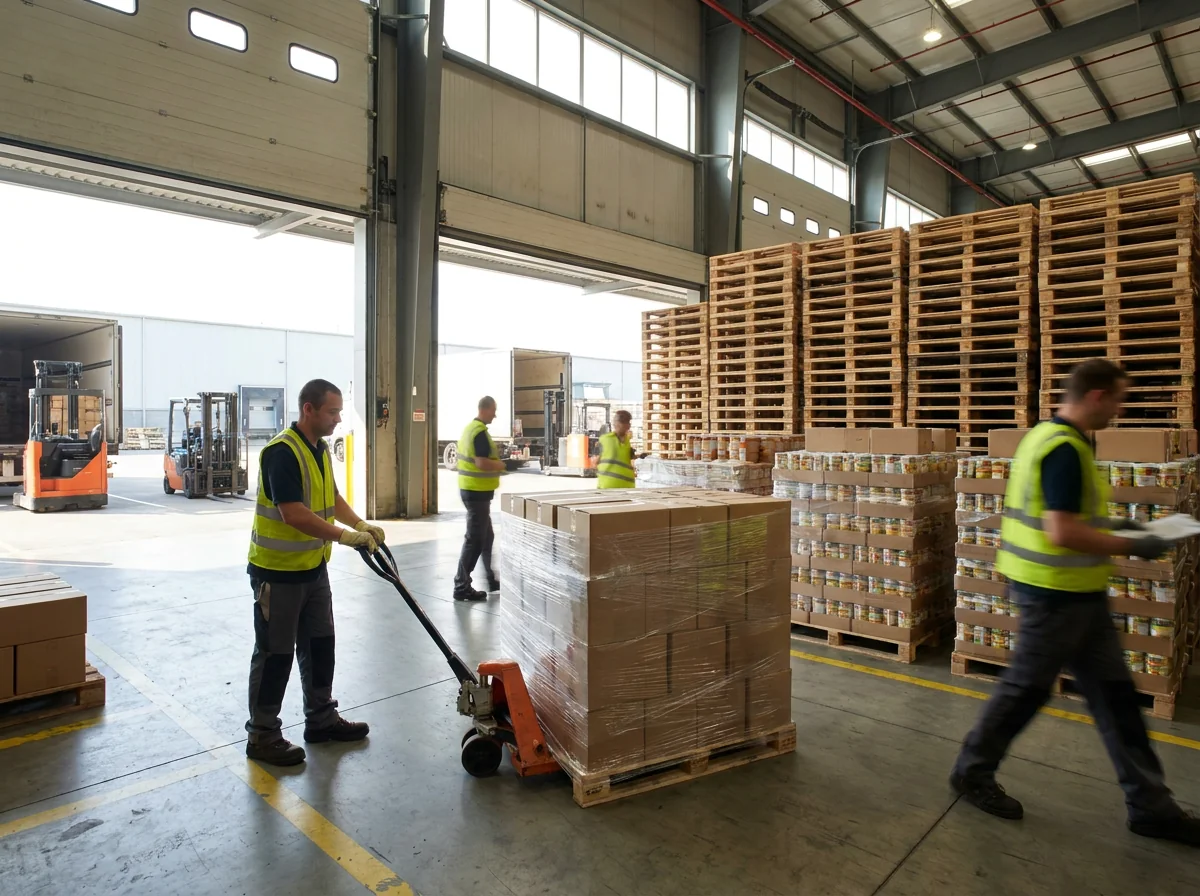
Catalog by the container
Importers & Distributors
A distributor sells a catalog, not a single SKU, and reorders by the container. The priority is consistent supply across every category, private-label labelling that carries the distributor's own brand, and loads planned to fill a container so freight per unit stays low across FCL and LCL bookings.
Typical order
Behind every channel
One Factory Floor Serves All Six
Whichever aisle you sell in, the same plant turns your order. That is what keeps a launch date, a rollout and a reorder on schedule.
72-hour design proofs
A new pack or a label change comes back as a proof inside 72 hours, so a seasonal range or a store rollout keeps its launch date.
Door-to-door worldwide
Finished pallets move on managed door-to-door logistics, so a program lands at the warehouse without a freight scramble.
7-day rush response
When a promotion or a stockout hits, a rush order turns inside seven days instead of the standard lead time.
Six certification systems
Every line carries ISO 9001, FDA, SGS, TÜV, LFGB and EU compliance, so a buyer audit clears in any market.
The full plant story sits on the about page, and the audit trail on quality & certifications.
Talk to Fiona
Tell Us Which Aisle You Sell In
Send your channel, your menu or SKU list and the markets you ship to. You'll get the matching product line, a material call and a mockup timeline back before any tooling is cut.