Walk into any café, takeaway shop, or supermarket and you will find plastic cups everywhere. They hold iced coffee, juice, milk tea, smoothies, and plenty of other drinks. So it is understandable that buyers sometimes wonder whether using plastic cups every day is actually a problem.
The short answer is that plastic cups are not automatically unsafe. What matters more is the particular cup, what goes into it, and how it is used. A cup made for a cold drink should not be judged by the same requirements as a cup intended for a hot beverage.
For a business buying thousands of cups, that distinction is far more useful than simply asking whether plastic is “safe.”
Food Safe Does Not Mean Suitable for Everything
“Food grade” sounds reassuring, but it is a fairly broad starting point.
A cup can be made from a material approved for food contact and still be the wrong choice for a particular application. Temperature, beverage type, storage conditions, and contact time all need to be considered.
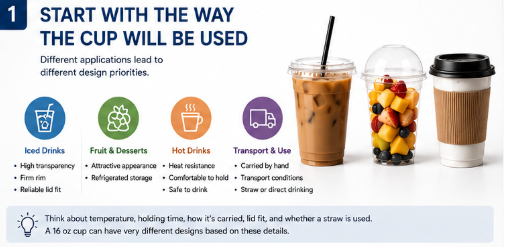
Takeaway coffee is a good example. A supplier selling cups for iced drinks may not be supplying the same specification used for hot coffee. The wall structure, rim, lid, and material selection can all be different.
This is something a custom plastic cup manufacturer should be able to explain before an order is confirmed. If a supplier only answers with “food grade” when asked about an application, there is probably more information worth checking.
What About Chemicals in Plastic Cups?
This is where many discussions about plastic packaging become unnecessarily alarming.
Plastic food packaging can contain different substances used to create the required properties during manufacturing. Under certain conditions, substances can migrate into food or beverages. That possibility is one reason food-contact materials are subject to migration requirements.
But migration is not the same thing as saying that a plastic cup is dangerous.
The conditions matter. A hot drink, an acidic beverage, long contact time, or another demanding application can require a different assessment from a cold drink that is consumed shortly after filling.
For buyers working with an OEM plastic cup supplier, it makes more sense to ask about the finished product and its intended application than to focus on the word “plastic.” Relevant compliance documents and test information can tell you much more about whether a particular cup is appropriate for your market.
PP, PET, rPET or PLA?
The material choice usually comes down to what the cup needs to do.
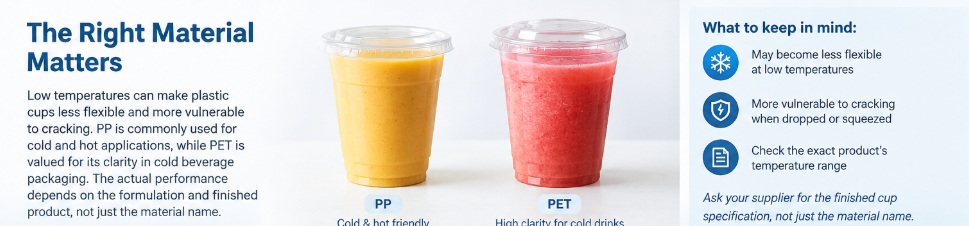
PP is commonly selected for applications where good temperature resistance is useful. PET is popular for cold beverages, especially when a clear cup helps customers see the drink. rPET can be considered when recycled content is important, although recycled material still has to meet the relevant food-contact requirements for the intended use.
PLA has a different role. It can make sense for businesses working with specific compostable packaging programs, but its heat performance needs to be considered before using it for hot drinks.
There is no reason to ask which material is simply “the safest” without first describing the application.
A wholesale plastic cup manufacturer will usually need to know whether the cup is for iced tea, juice, coffee, smoothies, frozen drinks, or something else before making a useful recommendation.
Problems Usually Start With the Wrong Application
A plastic cup does not suddenly become unsafe because it is made from plastic. Problems are more likely when the product is used outside its intended conditions.
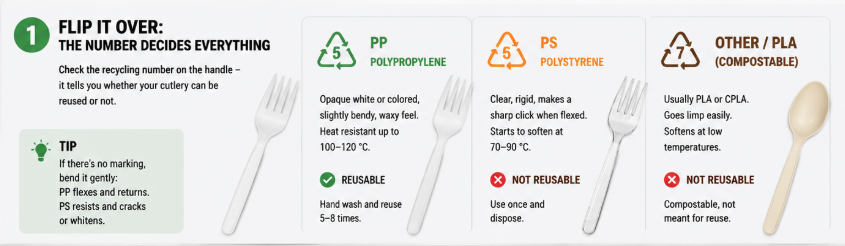
A lightweight cup designed for cold drinks may deform when exposed to a much hotter liquid. A disposable cup may survive being washed and reused, but that does not mean it was designed for repeated use. A cup that works well in a refrigerator may not necessarily be suitable for freezing.
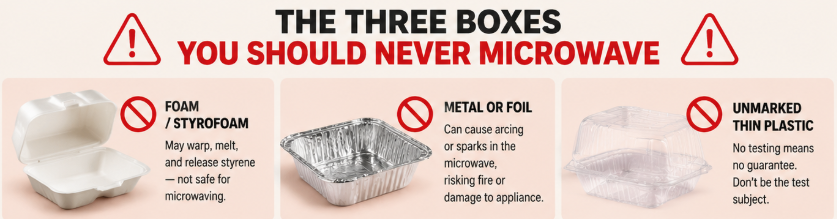
Microwave use is another common point of confusion. Food-contact suitability and microwave suitability are not the same claim.
These details are easy to overlook when the main focus of a purchasing decision is unit price. An experienced ODM plastic cup factory should be able to state the intended application clearly instead of leaving the buyer to guess.
The Lid Is Part of the Product
For takeaway drinks, there is little value in testing the cup while ignoring the lid.
A lid that does not fit properly can cause leakage even when the cup itself performs perfectly. For hot beverages, the lid also needs to cope with the intended temperature and handling conditions. For cold drinks, sealing, straw openings, condensation, and stacking may matter more.
That becomes even more important when a beverage company wants its own branding or a special cup shape.
A custom disposable plastic cup supplier should look at the cup and lid as a working combination. The same cup may need a different lid depending on whether it is being sold for coffee, smoothies, milk tea, or sealed cold drinks.
What Should You Check Before Buying?
Start with the drink rather than the catalogue.
Tell the supplier what the cup will contain and how it will be handled. A buyer ordering cups for iced juice has a different specification from a buyer filling cups with hot coffee. If the drinks will be refrigerated or frozen, mention that as well.
For overseas orders, the destination market should be discussed before production. Food-contact requirements can vary between markets, and documentation should correspond to the actual material and finished product being supplied.
A plastic drinking cup factory for bulk orders should be able to provide material details and relevant compliance information rather than relying entirely on a generic food-safe statement.
For recycled-content products, ask about the recycled material specifically. “Made with recycled plastic” does not by itself answer whether the finished cup meets the requirements of the intended food-contact application.
A Good Sample Is Not Enough
This is one issue that often gets overlooked during supplier selection.
A sample may look excellent. The real test comes when the order moves into mass production.
If the approved sample has a particular weight, wall thickness, transparency, rim dimension, or lid fit, those characteristics should remain reasonably consistent across production batches. Otherwise, a buyer can end up with cups that technically resemble the approved product but behave differently in actual use.
This matters even more for private-label packaging. A private label plastic cup manufacturer needs to control the agreed specifications throughout production, not just produce an attractive pre-production sample.
For large orders, consistency is part of product quality.
So, Are Plastic Cups Bad for You?
There is no useful answer that treats every plastic cup as the same product.
A PET cup used for an iced drink has different requirements from a PP cup used for a hotter application. A disposable cup has different expectations from a reusable one. A cup sold in one market may also require different compliance documentation from one exported somewhere else.
For buyers, the practical approach is simple: define the application first, then choose the material and cup design around it.
A plastic cup supplier for foodservice businesses should be able to discuss those requirements before quoting a large order. If the project involves custom dimensions, branding, or a specific beverage application, an OEM disposable cup manufacturer for beverage brands should also be able to keep those specifications consistent from sample approval through production.
In other words, the question is not really “Is plastic bad?”
The better question is whether this particular plastic cup is the right product for this particular drink and application.