A café orders clear cups for iced coffee, then discovers that its new smoothie menu needs dome lids. Should it buy another cup size, or can the existing cups do both jobs?
For a small shop, this might seem like a minor purchasing decision. For a distributor supplying several cafés, it can affect how many products need to be stocked, how frequently orders are placed, and what happens when one item runs out before the others.
Using one cup with two lid styles is possible. The catch is that a cup and a lid need to work as a combination, not just look as though they belong together.
The Lid Has to Fit the Actual Cup

Buyers often begin with capacity and opening diameter. These figures help narrow down the options, but they do not tell the whole story.
Two cups marked 16 oz may have different rim profiles. A lid might fit one securely but sit unevenly on the other. Sometimes the difference is obvious; sometimes the lid appears to be in place until someone handles the filled cup.
When sourcing from a custom plastic cup manufacturer for beverage brands, ask for the specific flat and dome lids approved for the same cup model. If the supplier recommends a lid based only on its nominal diameter, request a physical sample before confirming the order.
The distinction matters even more when cups and lids come from different suppliers. Matching measurements do not necessarily mean matching designs.
Think About the Drink, Not Just the Packaging

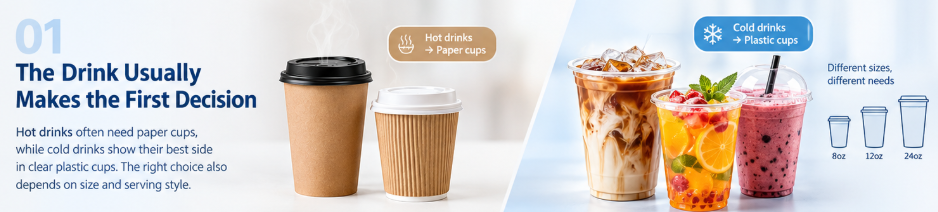
A flat lid is usually sufficient for iced coffee, lemonade, and many fruit teas. Drinks with whipped cream, thick foam, or substantial toppings may need the additional clearance of a dome lid.
The difficulty comes when a business wants one cup to cover both types of order. A smoothie might fit in a 16 oz cup, for example, but its toppings could leave very little room for the lid. A larger dome may solve the clearance problem, yet the cup still needs to hold the intended serving without overflowing.
A plastic cup supplier for takeaway drink shops should understand how the cup will be used, rather than simply matching a capacity to a menu item.
Before changing the packaging range, try the cup with the drinks that are most difficult to accommodate. If staff need to reduce portions or alter toppings to close the lid, the proposed standardization is not working as intended.
A Quick Fit Check Can Miss the Real Problem
Imagine a busy counter during the lunch rush. An employee fills a cup, presses on the lid, and moves straight to the next order. Nobody has time to inspect every rim carefully.
That is where an inconsistent fit becomes a practical concern. A lid that needs repeated pressure slows down service. One that has not engaged evenly may loosen when the customer picks up the drink or places it in a delivery bag.
A wholesale plastic cup manufacturer for foodservice businesses should be able to provide samples for testing before a large purchase.
Use both lid styles on the same cup model. Fill the cups to the normal serving level, close them as employees would during service, and check the rim all the way around. Repeat the process with several samples rather than relying on a single successful fit. For delivery orders, include ordinary handling and transport.
If a shop uses an automatic lid applicator, manual testing alone is not enough. The proposed combination also needs to work with the existing equipment.
Will One Cup Actually Save Money?

This is where the decision becomes less straightforward.
Suppose a distributor sells cups to several cafés. Most customers order flat lids, while dome lids are needed mainly for smoothies. Switching to one cup model could simplify the cup inventory, but the distributor still needs to manage two separate lid products.
Minimum order quantities can make the situation more complicated. If dome lids arrive in large cartons but move slowly, the business may end up holding more stock than it did before. The number of cup models has fallen, but the overall purchasing arrangement may not have improved.
A custom plastic cup supplier for restaurant chains should be evaluated against the full order: cup and lid prices, carton quantities, lead times, and expected usage. A lower unit price is not particularly helpful if it comes with excess inventory or awkward replenishment requirements.
There is no universal answer here. A business selling mostly iced coffee may benefit from a shared cup, while a smoothie specialist might need a different arrangement to suit its portions and toppings.
What Should Be Confirmed Before the First Bulk Order?
Ask the supplier to identify the exact cup, flat lid, and dome lid models. Request samples of all three and keep a record of the combination that passes testing.
A plastic cup factory for wholesale beverage packaging should also clarify how the approved specifications will be maintained for repeat orders. If a cup or lid is changed later, the previous test result should not automatically be treated as proof that the replacement will fit.
For buyers managing multiple customer accounts, OEM plastic cup packaging for beverage distributors can benefit from clear product references. Warehouse staff should be able to identify which lids belong to which cup without relying on vague descriptions such as “standard size.”
It is a small administrative step, but it helps prevent a familiar purchasing problem: a replacement product arrives, looks almost identical to the original, and turns out not to fit properly.
When Does a Shared Cup Make Sense?
One cup with two lid options can be a sensible arrangement when both lids fit securely, the cup suits the drinks being served, and the inventory figures support the change.
For businesses buying bulk clear plastic cups for cold beverage service, the goal should not be to reduce the number of products at any cost. It should be to remove unnecessary variation without creating problems for staff or customers.
A custom cold drink cup manufacturer for beverage chains should be able to support the decision with matching specifications and samples. Buyers should then make the final call based on actual drinks, normal handling, and purchasing requirements.
If the same cup performs reliably with both lids, there is a good reason to standardize. If it compromises the serving or makes closure less dependable, keeping two cup designs may be the more practical choice.