Clamshell packaging is everywhere in food retail. A box of strawberries, a bakery dessert, or a prepared salad from a supermarket may already be using this type of packaging.
Most people recognize the shape, but they may not know why this design is used so often.
For packaging buyers, the answer is not simply because it looks clean or transparent. A food package needs to survive several stages before reaching the customer. It may be stacked in a warehouse, transported across cities, placed on a retail shelf, and opened by the final consumer.
A package that works well in one stage may create problems in another. This is why companies usually evaluate clamshell packaging based on actual use rather than appearance alone.
The Basic Structure of Clamshell Packaging
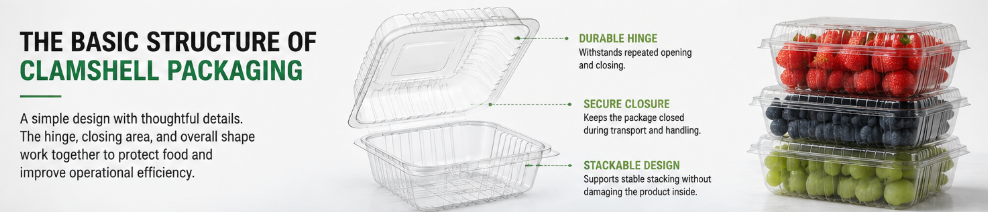
Clamshell packaging is made with a container and lid connected together by a hinge. The package opens from one side and closes back into position, forming a complete enclosure around the product.
The design sounds simple, but small details make a difference.
The hinge needs to withstand repeated movement. The closing area needs to hold securely during transportation. The overall shape needs to support stacking without unnecessary pressure on the product inside.
Unlike traditional food containers that use separate lids, clamshell packaging arrives as one complete piece. This reduces the need to manage different packaging components during daily operations.
For companies ordering large quantities, this difference can affect packing speed, storage space, and production efficiency.
A custom clamshell packaging manufacturer usually adjusts these details according to the product rather than using one standard design for every application.
Why Many Food Companies Prefer This Packaging Format

The first thing customers notice about clamshell packaging is visibility.
For fresh food, appearance matters. A clear container allows shoppers to check color, freshness, size, and arrangement before purchase. This is especially important for products where visual quality influences buying decisions.
Protection is another reason.
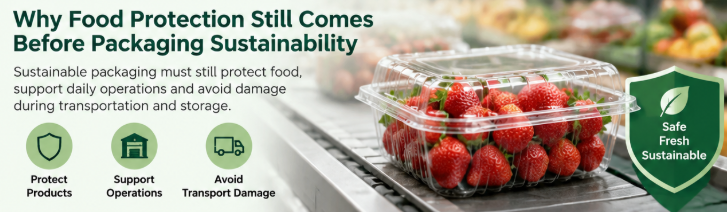
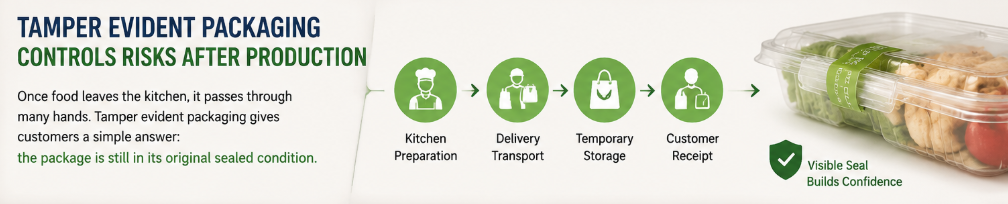
A fruit tray or dessert package may travel through several hands before reaching the customer. A closed structure reduces direct contact and helps keep the product in better condition.
There is also a production-side advantage. Workers do not need to match containers with separate lids, which can make packing operations simpler.
These benefits explain why clamshell packaging appears in many food categories, even though the products themselves may be completely different.
Common Food Applications
Fresh produce is one of the most familiar applications. Berries, grapes, sliced fruits, and vegetables often use transparent clamshell containers because customers want to see what they are buying.
Bakery products are another common example. Cakes and pastries are easily damaged by pressure, so packaging needs to provide protection without hiding the product.
Ready-to-eat meals and takeaway products have different priorities. In these cases, stacking, transportation, and closing performance often become more important than appearance.
The same packaging style may be used across different industries, but the structure is usually adjusted based on product weight, moisture level, and distribution conditions.
This is why an experienced food clamshell packaging supplier normally starts with product information before suggesting a packaging option.
Choosing Between PET, PP, and Other Materials

Material selection is one of the first decisions buyers face.
PET is widely used when transparency is the main requirement. Retail products often rely on PET because the clear appearance helps create a better shelf presentation.
PP is chosen in situations where higher temperature resistance is needed. Some prepared food applications require packaging that can handle warmer conditions.
Recycled materials such as rPET are also attracting attention from brands with sustainability targets. However, recycled content alone does not determine whether a package is suitable. Food-contact requirements, strength, and production stability still need to be considered.
A capable OEM clamshell packaging supplier should be able to explain the differences between materials based on the product application instead of simply providing a price list.
Problems That Usually Appear in Real Orders
Packaging samples rarely show every possible problem.
One issue buyers sometimes discover after production is cracking during transportation. The package may look fine when handled individually but perform differently when hundreds of units are stacked together.
The hinge area is another point that deserves attention. A weak hinge can affect the opening experience and reduce the useful life of the package.
Size consistency is also important. For companies running regular production, even small differences between batches can create trouble with filling equipment or retail presentation.
These problems are usually related to manufacturing control rather than the packaging concept itself.
Selecting a Supplier for Long-Term Orders
Many buyers start by comparing prices, but packaging cost is not only the unit price.
A cheaper package may create additional expenses if products arrive damaged or if quality changes between shipments.
Manufacturing experience matters, especially for companies purchasing large volumes. Mold accuracy, material control, and inspection procedures all influence the final product.
For brands developing their own packaging style, a private label clamshell packaging factory may provide more flexibility in size, structure, and appearance.
Repeat supply is another factor that cannot be ignored. The first order is only the beginning. Retailers and food brands usually need the same specifications months or years later.
How Clamshell Packaging Compares With Other Options
Clamshell packaging is not designed to replace every type of food package.
Compared with containers using separate lids, it offers a simpler one-piece structure. This can reduce handling work during packing.
Compared with paper-based packaging, plastic clamshell containers generally provide stronger moisture protection and clearer product visibility.
Compared with flexible bags, they provide more physical protection for products that are sensitive to pressure.
The better choice depends on the product itself. A bakery item, fresh fruit product, and prepared meal may all require different packaging decisions.
A professional clamshell packaging supplier for food manufacturers can help evaluate these differences before large-scale purchasing.
What Buyers Need to Check Before Ordering
Before moving into production, packaging buyers usually confirm several practical points.
Material type, dimensions, thickness, production capacity, and delivery schedule should be clearly discussed.
For new products, design support may also be needed. An ODM clamshell packaging manufacturer can participate earlier in the process and help adjust the structure before production begins.
Good packaging is not only about receiving boxes from a factory. It is about making sure those boxes continue to work after entering real distribution channels.
Final Thoughts
Clamshell packaging has become popular because it solves several everyday problems at once. It keeps products visible, provides protection, and makes handling easier.
But the best packaging choice depends on more than the shape of the container. Material, structure, product requirements, and supplier capability all affect the final result.
For companies purchasing food packaging in bulk, working with an experienced clamshell packaging factory for wholesale food applications can help maintain quality consistency and avoid problems during long-term cooperation.