Choosing new food packaging is not simply a matter of replacing conventional materials with a greener option. For many food companies, the difficult part comes after the decision is made: the package still needs to protect products, support daily operations, and avoid creating problems during transportation or storage.
This is especially true for clamshell packaging. A package may use recycled or compostable materials, but buyers still need to consider whether it can handle real business conditions. Fresh food, bakery products, prepared meals, and retail items all face different challenges after leaving the production line.
For packaging buyers, the most practical question is not “Is this packaging environmentally friendly?” but “Can this packaging reduce environmental impact while keeping our products safe and consistent?”
That balance is where eco friendly clamshell packaging creates real value.
Why Food Protection Still Comes Before Packaging Sustainability
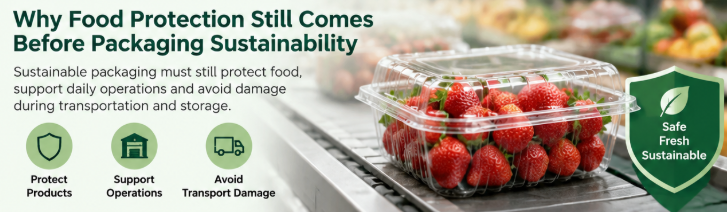
Food companies often deal with a difficult situation when changing packaging. Customers and regulations may encourage more sustainable choices, but the packaging still needs to perform the same basic functions as before.
A package that cracks during transportation, loses its shape under pressure, or fails to prevent leakage can create additional waste. The damaged food, replacement production, and extra logistics involved may have a greater impact than the packaging itself.
For example, fresh produce requires protection against pressure because visual quality directly affects sales. A slightly damaged fruit or vegetable may no longer meet retail standards. Bakery products need enough support to prevent deformation, while takeaway meals require stronger closure performance because leakage can create customer complaints.
This is why many buyers working with an eco friendly clamshell packaging manufacturer focus on application testing before making purchasing decisions. They want to know how the package performs after repeated handling, stacking, and transportation.
A successful sustainable package is not only made from a better material. It must also help businesses reduce product loss throughout the supply chain.
Selecting Materials Based on Product Conditions
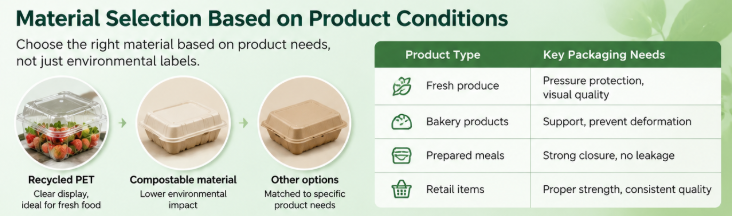
Material selection is often the first topic discussed when companies explore sustainable packaging. However, choosing a material should start with the product requirements rather than the environmental label.
Different materials provide different advantages. Some offer better transparency for retail display, while others provide stronger temperature resistance or improved end-of-life options.
For products where appearance is important, recycled PET clamshell packaging is often considered because clear packaging allows customers to view the product directly. This is valuable for fresh food brands that rely on product presentation.
However, transparency alone is not enough. Buyers also need to consider strength, consistency, food contact requirements, and whether the material can maintain performance during large-scale production.
A professional custom clamshell packaging supplier will usually review the complete application before recommending a material. The supplier needs to understand where the package will be used, how long the product will be stored, and what conditions it will experience.
Compostable materials provide another possible direction for companies seeking lower-impact options. However, they are not a universal replacement. Packaging for short-term products may have different requirements compared with products that require longer storage or exposure to moisture.
The better approach is matching material characteristics with actual usage. A packaging choice should solve the company’s specific problem rather than simply follow a market trend.
How Clamshell Design Helps Reduce Unnecessary Waste
Sustainability is not only related to the material itself. Packaging design also affects resource use and product protection.
Reducing material thickness may appear to be an easy way to create greener packaging, but the result depends on whether the package can maintain enough strength. A package that uses less material but causes more damaged products may not create a better outcome.
Modern clamshell designs focus on improving structure efficiency. By optimizing forming areas, support points, and overall shape, manufacturers can reduce unnecessary material while keeping the package suitable for commercial use.
For businesses purchasing large quantities, design improvements can create noticeable differences. Small changes become significant when applied across thousands or millions of units.
An experienced OEM clamshell packaging factory can help buyers evaluate these details before production begins. Instead of simply supplying a standard container, manufacturers can adjust the structure according to product weight, filling process, and transportation requirements.
The connected lid and base structure of clamshell packaging also provides operational advantages. Compared with separate containers and lids, it reduces the number of components involved in packing and inventory management.
However, the structure still needs careful development. The hinge must remain durable, the locking system must work consistently, and the package must provide convenient handling without reducing protection.
Sustainable Packaging Needs to Work Through the Supply Chain
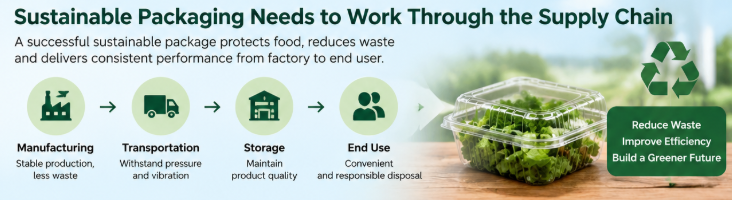
A packaging decision should not stop at the factory door. The real performance of packaging appears during distribution, storage, and final use.
During manufacturing, stable production helps reduce defective units and unnecessary material consumption. For companies importing packaging in large volumes, consistent quality is often more valuable than small differences in initial pricing.
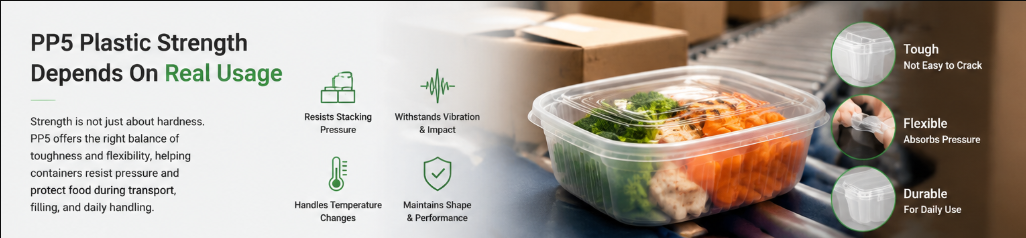
Transportation creates another challenge. Packages may experience stacking pressure, vibration, temperature changes, and long-distance movement. A design that works in a controlled environment may not always perform the same way during actual distribution.
This is why many businesses choose an eco friendly clamshell packaging supplier for food brands that understands both packaging production and supply chain conditions.
A practical sustainability assessment should include the entire process. A package that protects food, reduces replacement shipments, and improves operational stability can provide environmental benefits beyond the material itself.
Disposal considerations also depend on the market. Different regions have different recycling infrastructure and regulations. Businesses need to consider whether the chosen packaging matches the requirements of their target customers and sales channels.
What Buyers Should Evaluate Before Making a Packaging Decision
For companies planning to adopt sustainable clamshell packaging, the first step is defining the actual requirements.
A fresh food retailer may prioritize product visibility and protection. A takeaway business may focus more on sealing performance and handling convenience. A bakery brand may need stronger support for delicate products.
After defining the application, buyers should evaluate supplier experience, production capability, and quality control systems.
For new product development, an ODM clamshell packaging manufacturer for retail applications can provide additional support during the design process. This allows businesses to adjust packaging dimensions, materials, and structures according to their market needs.
Sample testing is also important. Packaging should be evaluated under conditions close to actual use, including transportation pressure, storage environments, and repeated handling.
Price remains an important factor, but it should not be the only measurement. A lower unit price may not create real savings if the package increases product damage or causes operational difficulties.
Building a More Practical Future for Sustainable Clamshell Packaging
The future of sustainable food packaging is not about choosing environmental goals over product protection. Businesses need packaging that performs reliably while supporting responsible resource use.
Eco friendly clamshell packaging Factories achieve this balance through the combination of suitable materials, efficient design, and stable manufacturing.
For companies looking for a wholesale clamshell packaging supplier for food distributors, the right partner should understand more than packaging production. They should understand how food moves through the supply chain and what challenges buyers face after placing an order.
Sustainable packaging works best when it solves real business problems. When protection and environmental considerations are developed together, clamshell packaging can help companies reduce waste, improve efficiency, and respond to changing market expectations without sacrificing product quality.