If you use deli boxes for meal prep, leftovers, sauces, or food storage, there is a good chance you have put one in the dishwasher without thinking twice.
The real test usually comes later.
Maybe the container comes out looking slightly different. Maybe the lid that used to snap on tightly now feels loose. Or perhaps nothing seems wrong after the first few washes, but after a while the box starts looking tired and doesn't stack quite as well as it used to.
So, are deli boxes dishwasher safe?
Sometimes, yes. But “reusable” and “dishwasher safe” are not interchangeable terms. And even a deli box that is suitable for dishwasher cleaning may not be designed to handle the same conditions over and over again.
If you are using deli boxes regularly, the more useful question is not whether one wash will damage the container. It is whether the box and lid can continue doing their job after repeated washing.

Can You Put a Deli Box in the Dishwasher?
The easiest answer is to check the product instructions first.
A deli box marked as dishwasher safe is designed with dishwasher cleaning in mind, although there may still be conditions attached to that claim. Some products have recommended temperature limits or specify which dishwasher rack should be used.
Things become less straightforward when there is no marking at all.
A box being made from plastic does not tell you enough. Even products made from the same material can behave differently because of their thickness, shape, forming process, and lid design.
This is something a custom deli box manufacturer for foodservice applications should be able to clarify before you place an order. If a container is intended for repeated use, the supplier should know what kind of washing environment it is designed to handle.
It is also worth remembering that surviving one dishwasher cycle proves very little. A container may come out perfectly fine once and gradually lose its shape after many more cycles.
Don't Forget the Lid

The lid is often where problems show up first.
A container can remain perfectly usable while its lid becomes slightly distorted. That might not sound serious until you try carrying soup, sauce, or a prepared meal in it.
A lid that no longer sits evenly can also make stacking less stable. In a restaurant or meal-prep operation, that small change can become annoying very quickly when dozens of containers are being handled every day.
For this reason, a reusable deli box supplier for meal prep companies should be asked about the lid separately. Is it dishwasher safe? Is it made from the same material as the container? Has the fit been checked after repeated washing?
Those questions are much more useful than simply asking whether the product is reusable.
Why Does a Deli Box Warp in the Dishwasher?

Plastic does not have to melt for heat to affect it.
A dishwasher exposes containers to hot water, detergent, strong water movement, and, depending on the machine and cycle, heated drying. The combination can be quite different from washing a box by hand in warm water.
Thin sections are generally more vulnerable to dimensional changes. Rims, corners, and the bottom of the container can also react differently from the main body.
This is one reason product construction matters when comparing a PP deli box factory for high-volume food packaging. Material selection is only part of the equation. The finished container needs to maintain its shape well enough for the lid to continue fitting properly.
If the box comes out of the dishwasher slightly warped, don't immediately assume it is harmless just because there is no obvious crack. A small change around the rim can be enough to affect the lid.
What If the Lid No Longer Fits?

This is probably the easiest problem to notice.
You put the lid on and it used to click into place with very little effort. Now one corner pops up, the lid feels unusually loose, or you have to press harder than before to close it.
That is not something to ignore if the container is being used for liquids or transported food.
A deli box manufacturer for commercial food storage should be thinking about more than the appearance of the product when it leaves the factory. The important question is how the container performs after the customer has actually used it.
For buyers, lid fit is worth checking during sample evaluation. Wash the sample under the conditions you expect to use in real life, then see whether the lid still behaves normally.
A box that looks excellent when new can tell you very little about its long-term performance.
How Should You Wash a Dishwasher-Safe Deli Box?

Once you have confirmed that the product is dishwasher safe, there are still a few practical things worth doing.
Don't leave a thick layer of food inside the box and expect the dishwasher to do everything. Dried sauce, grease, and other stubborn residue can be much harder to remove after a hot wash.
Rack position matters too. If the manufacturer recommends the upper rack, follow that instruction rather than putting the container wherever there happens to be space. The lower part of some dishwashers is exposed to more direct heat.
The lid also needs some room. Avoid wedging it underneath heavy plates or cookware where it can be bent during the wash.
These details may sound minor at home. They become considerably more important when a deli box supplier for restaurant and catering customers is supplying containers that will be washed and reused frequently.
Good product instructions should make this information clear instead of leaving customers to figure it out themselves.
How Many Dishwasher Cycles Can a Deli Box Handle?
There is no useful universal number.
You may see claims about a certain number of dishwasher cycles, but the actual lifespan of a deli box depends on much more than the number printed on a specification sheet.
The washing temperature, drying cycle, detergent, container thickness, design, and frequency of use all play a role. Two products can therefore have very different results even when both are described as dishwasher safe.
Instead of trying to count every cycle, pay attention to what happens to the box.
Does the bottom still sit flat? Does the rim keep its original shape? Does the lid close with the same amount of pressure? Are there new cracks or areas that are becoming unusually brittle?
For companies comparing long-life deli box manufacturers for repeated foodservice use, these practical observations can be more useful than a simple “dishwasher safe” label.
When Should You Stop Reusing the Box?
A few light scratches do not automatically mean a deli box needs to be thrown away.
Repeated use naturally leaves some marks, especially when containers are stacked or washed alongside other dishes. The more important issue is whether the damage affects the container's function or makes it difficult to clean properly.
Deep scratches, cracks, severe warping, or a damaged rim deserve more attention. The same applies when the lid repeatedly comes loose or can no longer fit properly.
If food residue is becoming difficult to remove because of the condition of the surface, that is another practical reason to replace the container.
For a food-grade deli box supplier for wholesale distribution, these are also useful points to consider when evaluating samples. A good sample should not only look clean and attractive straight out of production. It should remain functional under the conditions your customers are likely to encounter.
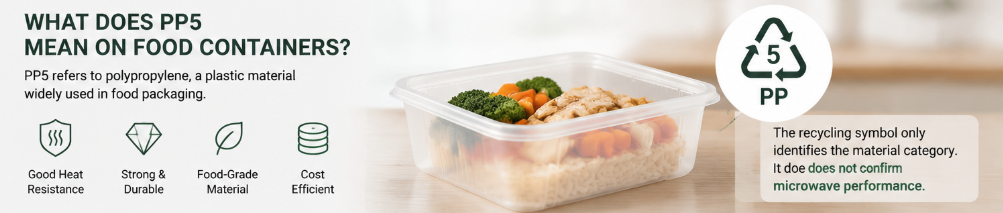
Dishwasher Safe Doesn't Mean Microwave Safe
These labels are sometimes treated as if they mean the same thing. They don't.
Dishwasher safe refers to cleaning. Microwave safe refers to heating food in a microwave. Reusable simply indicates that the product is intended to be used more than once.
A deli box can have one property without automatically having the others.
This distinction is especially important when selecting packaging for different applications. A restaurant may need containers that are frequently washed, while a meal-prep company may also want microwave compatibility.
When discussing requirements with OEM deli box manufacturers for private-label packaging, it is better to specify each use separately instead of asking for a product that is simply “safe.”
What If There Is No Dishwasher-Safe Marking?
This is a common situation with older containers or products purchased without detailed packaging information.
If you cannot find a dishwasher-safe statement, check the original product documentation or ask the manufacturer. Material information can help, but it should not be treated as a complete answer by itself.
One successful wash should not be used as a test of long-term durability either. A container can survive several washes and then gradually develop problems with its shape or lid.
For businesses working with a custom deli box factory for private-label orders, this is something worth settling before production. Ask about the material, intended temperature range, lid performance, and whether repeated dishwasher use has actually been evaluated.
That conversation can prevent a surprisingly simple packaging issue from turning into a customer complaint later.
What Should You Check Before Buying Deli Boxes?
If the containers will be used repeatedly, don't make the purchase decision based only on appearance and unit price.
Ask whether the container is dishwasher safe and whether the lid is covered by the same specification. Find out what temperatures the product is designed to handle and whether the supplier has tested it under repeated washing conditions.
It is also useful to ask how the lid performs after washing. Does it still close securely? Does the container remain stackable? Are there limitations on the dishwasher cycle?
These are practical questions for anyone comparing a deli box factory for restaurant and meal-prep applications, especially when the order involves thousands of pieces rather than a few containers for personal use.
The cheapest box is not necessarily the cheapest option once warped containers, loose lids, replacements, and customer complaints start adding up.
The Bottom Line
A deli box can be dishwasher safe, but that does not automatically mean it will remain in perfect condition after unlimited dishwasher cycles.
Check the manufacturer's instructions first. Treat the container and lid as two parts that both need to perform properly. And if the box starts to warp or the lid stops fitting as it should, don't keep washing it simply because it has not visibly cracked.
For occasional home use, the difference may not seem important. For meal prep, catering, foodservice, and other high-volume applications, it can make a real difference.
When choosing a deli box, the better question is not just “Can I put this in the dishwasher?”
It is “Will this container and its lid still work properly after I have done it again and again?”
That is the question worth asking before you buy.