Paper plates are often the easiest choice when people want a quick meal without extra cleanup. They are common for breakfast, takeout meals, parties, and everyday dining. But when leftover food needs to be reheated, one question usually comes up before opening the microwave door: Are paper plates microwave safe?
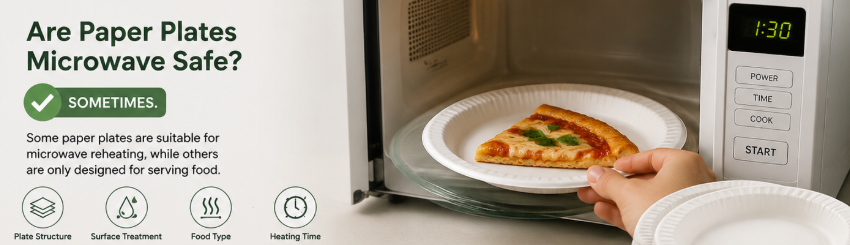
The short answer is: sometimes.
Some paper plates are suitable for microwave reheating, while others are only designed for serving food. The difference is not simply whether the plate is made from paper. Factors such as the plate structure, surface treatment, food type, and heating time all affect how it performs.
A plate that works well for holding a sandwich for a few minutes may not perform the same way when used with hot, oily, or moisture-heavy food. Knowing what makes a paper plate suitable for microwave use can help prevent common problems such as softening, bending, or food spills.
Can You Put Paper Plates in the Microwave?
In many situations, paper plates can be used in a microwave if they are designed and labeled for that purpose.
Microwave heating works by increasing the temperature of the food rather than directly heating the plate. However, the heat, steam, and oil released from the food can affect the plate during the process.
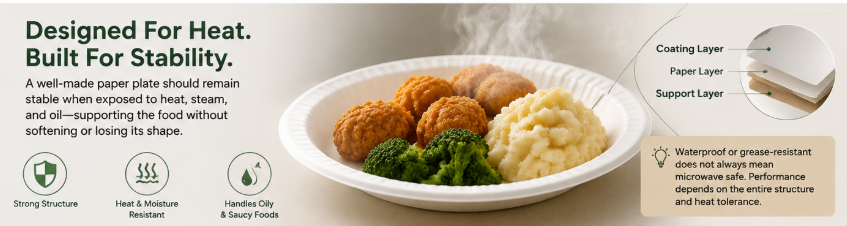
A well-made paper plate should remain stable when exposed to these conditions. It should be able to support the food without becoming too weak or losing its shape.
However, the market includes many different types of disposable paper plates. Some are made for short-term serving, while others are developed for hot food applications. A professional paper plates manufacturer for commercial food applications usually designs products based on how customers actually use them, including serving conditions and possible reheating needs.
The important point is that “paper plate” is a broad category. Microwave performance depends on the specific product, not only the material name.
Why Do Some Paper Plates Handle Microwave Heat Better?
The main difference comes from product design.
A paper plate needs enough structural strength to deal with heat and moisture. When a plate holds dry food, there is usually little pressure on the material. But when it holds hot meals with sauces, oil, or steam, the plate faces a much more demanding environment.
For example, reheating a slice of bread creates very different conditions compared with heating fried food or a meal containing sauce. The second situation requires better resistance because moisture and grease can gradually affect the paper structure.
This is why a paper plates supplier for foodservice companies usually considers the final application before recommending a product. Restaurants, catering businesses, and meal providers often need plates that perform consistently with different food types.
A suitable paper plate is not just about appearance. Strength, stability, and food compatibility are equally important.
Does The Coating On A Paper Plate Affect Microwave Safety?
Many paper plates include treatments that improve resistance against oil and moisture. These treatments help prevent food liquids from quickly passing through the plate.
However, one common misunderstanding is that a waterproof or grease-resistant plate is automatically microwave safe.
These features solve different problems. A coating may help during normal food service, but microwave performance depends on the entire product structure and whether it has been designed for heating conditions.
For businesses purchasing disposable packaging, this difference matters. A custom paper plates factory providing OEM and ODM solutions can develop products according to specific requirements, such as takeaway meals, catering use, or reheating applications.
The key question is not only “Does the plate resist liquid?” but also “Can the plate maintain performance when exposed to heat?”
When Is It Safe To Microwave Paper Plates?
The safest way to use paper plates in a microwave is to consider the situation in which they are being used.
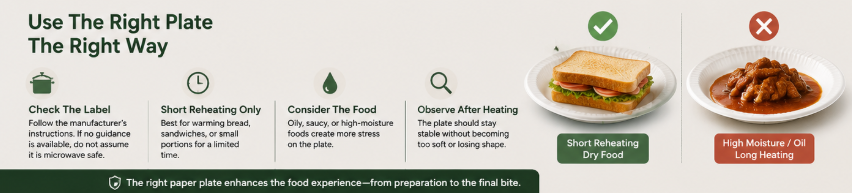
Short reheating is usually the most suitable application. Warming bread, sandwiches, or small portions of food for a limited time generally places less stress on the plate.
The risk increases when food contains more moisture or oil. Hot soups, oily dishes, and fried foods can transfer more heat and liquid to the plate surface. If the plate is not designed for these conditions, it may become softer and harder to handle.
For businesses using disposable plates for prepared meals, choosing the correct product is especially important. A paper plates supplier for wholesale food packaging solutions should understand how different foods interact with packaging during storage, delivery, and reheating.
Heating time is another important factor. Paper plates are designed for serving food and short reheating, not for replacing cooking containers. Longer heating periods create more stress on the plate structure.
How Can You Tell If A Paper Plate Is Microwave Safe?
The most reliable way is to check the manufacturer’s instructions.
If a paper plate is designed for microwave use, the product information should clearly explain its recommended application. When there is no guidance available, users should avoid assuming that the plate is suitable.
The purpose of the plate also provides useful information. A plate created for cold snacks at an event may not have the same performance as one designed for hot meals or takeaway services.
Commercial buyers often work with a paper plates factory for bulk disposable tableware production because they need clear product specifications before purchasing large quantities.
Another practical method is observing the plate after heating. A suitable plate should still feel stable and should not become excessively soft or lose its shape. If the plate changes significantly during normal reheating, it may not be suitable for that application.
What Are The Most Common Mistakes With Microwave Paper Plates?
The first mistake is assuming every paper plate is identical.
Two products may look similar but perform differently because of differences in paper quality, manufacturing process, and surface treatment.
Another mistake is using paper plates for long heating cycles. Disposable plates are created for convenience and food service, not as a replacement for microwave cookware.
Food selection is also important. A dry snack and a hot oily meal create completely different conditions. The same plate may perform well in one situation but not another.
For brands and distributors, working with an OEM paper plates manufacturer specializing in food packaging helps reduce these uncertainties because product development can be aligned with the intended use.
Should Restaurants Choose Microwave-Compatible Paper Plates?
For food businesses, microwave performance is not only about convenience. It can influence customer satisfaction.
Many customers reheat takeaway meals after receiving them. If the plate becomes weak, leaks, or loses its shape, the packaging experience becomes part of the problem.
This is why restaurants, catering companies, and packaging distributors usually look beyond price when selecting disposable tableware. They need products that provide stable performance during real usage.
A reliable paper plates factory with custom manufacturing capabilities can help businesses choose suitable structures based on their menu, packaging requirements, and customer expectations.
The right disposable plate supports the entire food experience, from preparation to final consumption.
Final Answer: Are Paper Plates Microwave Safe?
Yes, some paper plates can be microwave safe, but not all paper plates are suitable for heating.
The safest choice is to use products that are specifically designed for microwave applications and follow the manufacturer’s instructions. Short reheating is usually less demanding, while oily foods, high-moisture meals, and long heating times require more attention.
For everyday users, checking the product information before heating is the easiest solution. For restaurants and food companies, choosing a reliable supplier ensures that disposable plates match the real needs of food service.
A good paper plate should provide more than convenience. It should offer reliable performance when customers need it most.