When people search for “Is PP5 microwave safe?”, they are usually not trying to understand plastic classification systems. They want a practical answer: can this container be heated safely, will it keep its shape, and is it suitable for daily food applications?
For restaurants, catering companies, meal preparation brands, and packaging distributors, this question directly affects packaging performance. A container that becomes soft, leaks, or loses its shape after heating can create customer complaints and increase operating costs.
PP5 is one of the most commonly used materials for hot food packaging because of its balance of heat resistance, durability, and cost efficiency. However, the number “5” alone does not mean every PP container is automatically suitable for microwave use.
The real answer depends on the material quality, product structure, and intended application.
What Does PP5 Mean on Food Containers?
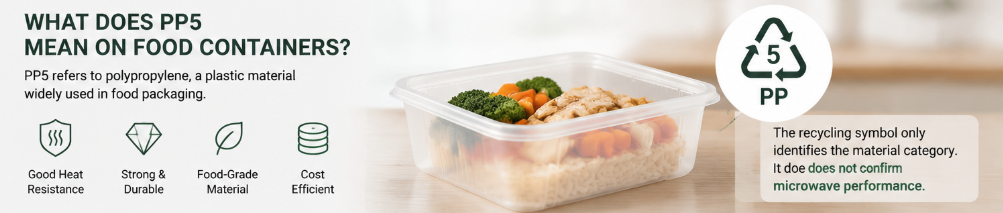
PP5 refers to polypropylene, a plastic material widely used in food packaging. Compared with materials such as PET or PS, polypropylene provides better heat resistance and maintains its structure more effectively during heating.
This makes PP a common choice for products such as meal containers, soup bowls, noodle boxes, and takeaway packaging.
However, the recycling symbol only identifies the material category. It does not confirm microwave performance.
A PP container designed for cold food storage may have completely different requirements from a PP container developed for reheating.
For businesses purchasing food packaging, choosing an experienced PP container manufacturer is important because professional suppliers consider not only the resin material but also thickness, structure, sealing performance, and end-use conditions.
Why Is PP Commonly Used for Microwave Food Containers?
The popularity of PP comes from its practical advantages in real food applications.
Many hot food products require packaging that can handle temperature changes while maintaining stability. When customers heat prepared meals, the container needs to remain firm enough to support the food and prevent leakage.
Compared with PET packaging, which is often selected for transparent cold food displays, PP is generally more suitable for applications where heat exposure is expected.
For example, ready meals, noodles, rice dishes, and soups often require containers that can tolerate reheating conditions.
This is why many food brands choose a custom PP packaging supplier when developing packaging solutions. The goal is not simply to purchase plastic containers, but to select packaging that matches the product’s actual usage environment.
Does PP5 Always Mean Microwave Safe?

Although PP is widely used for microwave applications, not every PP5 container should automatically be placed in a microwave.
A microwave-safe container requires more than the correct material.
The container design plays an important role. Wall thickness, shape stability, lid structure, and sealing performance all influence how the product performs during heating.
A well-designed PP container should maintain its form while reducing risks such as deformation or leakage.
The food itself also matters. Meals containing water, such as rice or noodles, usually heat more evenly because moisture absorbs microwave energy. Foods with high oil content may require more attention because oil can reach higher temperatures during heating.
A reliable PP food container supplier should provide clear application guidance instead of only identifying the product as PP5.
What Should You Consider Before Heating PP Containers?
The first thing to check is whether the product is specifically designed for microwave use. Manufacturers usually provide recommendations based on product testing and intended applications.
The second consideration is the container structure.
For reheating applications, features such as ventilation design and secure lid fitting can improve user experience. Completely sealed containers may create pressure during heating, while unsuitable lids may affect sealing performance.
Heating time and temperature are also important factors. Even a suitable PP container has a recommended usage range. Excessive heating may reduce performance over time.
For food companies, these details are especially important because packaging performance directly influences customer satisfaction.
A professional PP packaging factory usually evaluates material selection, product design, and production consistency together to ensure stable quality.
Common Mistakes When Using PP Containers
One common misunderstanding is that PP containers can handle unlimited heating because polypropylene has good heat resistance.
In reality, microwave performance depends on the specific design and application.
Another mistake is heating an empty container. Without food inside, there is less moisture to absorb microwave energy, which may create uneven heating conditions.
Improper lid handling is another issue. Some containers require the lid to be opened slightly or ventilation features to release steam during reheating.
For commercial food operations, these small details can become major problems when packaging is used thousands of times every day.
Working with a professional PP container supplier helps businesses avoid these issues through better product selection and application support.
Choosing PP Containers for Different Food Applications
Different food products have different packaging requirements.
Ready meals usually require containers with good heat resistance and reliable sealing because customers often reheat them before consumption.
Soup and liquid foods require stronger leak protection because transportation stability is critical.
Frozen food applications require additional consideration because packaging may experience large temperature changes between storage and heating.
High-oil foods also need careful evaluation because their heating behavior differs from water-based foods.
A suitable container is not determined only by material type. The design must match the food, storage method, delivery process, and customer usage habits.
This is why many brands work with a PP container factory that can provide consistent production and application-based recommendations.
How Businesses Should Select Microwave-Safe PP Containers
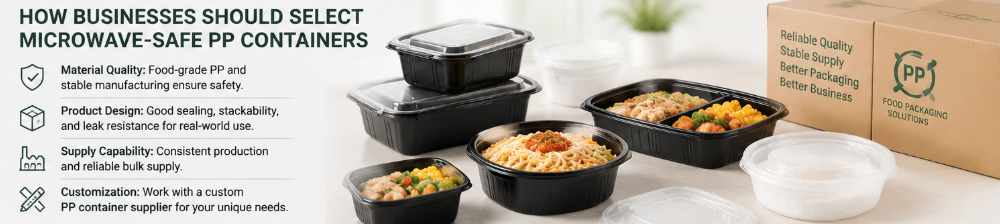
For commercial buyers, choosing PP packaging requires more consideration than simply checking the PP5 mark.
A suitable supplier should understand food contact requirements, production standards, and practical usage conditions.
Material quality is the foundation. Food-grade polypropylene and stable manufacturing processes help ensure consistent performance.
Product design is equally important. Containers used for delivery need good stacking ability, secure lids, and resistance against leakage.
Supply capability also matters for businesses purchasing large volumes. Stable production capacity helps avoid packaging shortages and quality differences between batches.
For brands that require specific sizes, shapes, or designs, working with a custom PP container supplier can provide more flexibility compared with standard products.
PP5 vs Other Food Packaging Materials
Different materials serve different purposes.
PP is widely used for hot food packaging because of its heat resistance and durability.
PET is often chosen for products where visibility is important, such as fresh fruit containers and refrigerated food displays.
PLA and fiber-based materials are commonly considered for sustainability-focused applications, although their heat performance depends on the specific product design.
The best packaging choice depends on the complete application rather than a single material feature.
A professional food packaging manufacturer can help businesses select the right material based on food type, storage conditions, transportation requirements, and customer expectations.
Final Thoughts: Is PP5 Microwave Safe?
PP5 is one of the preferred materials for microwave food containers because it offers good heat resistance and structural stability.
However, microwave safety depends on more than the plastic code. The product design, manufacturing quality, and intended usage all influence performance.
For consumers, the key is following the manufacturer’s instructions.
For businesses, the more important question is choosing the right packaging partner.
A reliable PP container manufacturer can provide products that are designed for real food applications, helping brands improve customer experience, reduce packaging issues, and maintain stable supply.