When purchasing disposable paper plates, many buyers focus on the final product first. They check the size, appearance, price, and packaging before making a decision. However, these factors only show part of the picture.
For businesses ordering thousands or even millions of paper plates, the production process behind the product is what determines long-term reliability. Material selection, forming methods, quality checks, and production management all influence whether the plates can perform well after delivery.
A capable paper plate manufacturer needs to do more than operate production equipment. The factory must control each stage carefully to make sure every batch meets the same requirements. This is especially important for restaurants, catering suppliers, retailers, and food packaging distributors that depend on stable supply.
Paper Selection Is The First Step In Production Quality
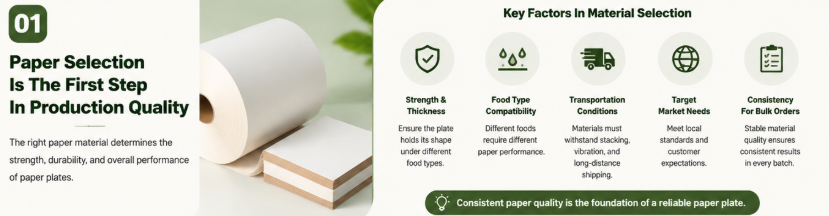
Before a paper plate takes shape, the choice of paper material already affects the final performance.
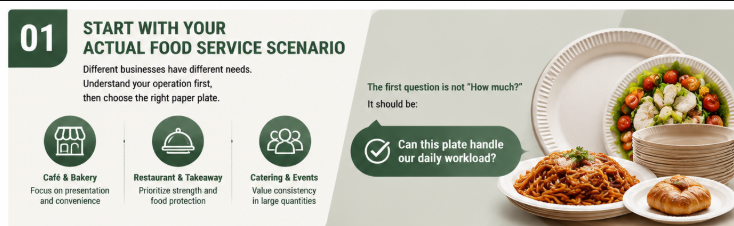
Different businesses use paper plates in different situations. A restaurant may need plates that can handle hot meals and heavier portions, while an event company may need a cost-effective option for large gatherings. The same material cannot always satisfy every application.
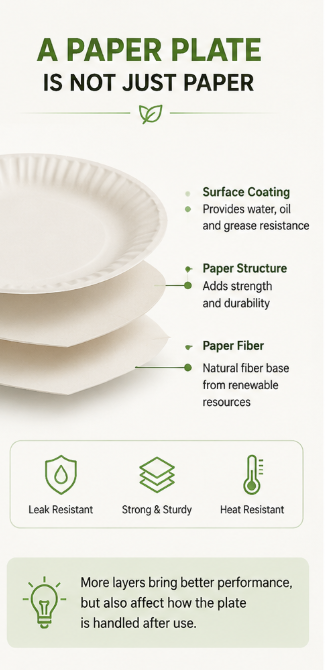
The thickness and strength of paper determine whether the plate can maintain its shape during use. Weak materials may bend when holding food, while overly heavy materials can increase production costs without providing additional value.
Experienced factories usually select materials according to the customer’s actual application. A custom paper plates supplier will consider factors such as food type, expected usage time, transportation conditions, and target market before recommending a suitable solution.
Material consistency is also important for bulk orders. A small difference in paper quality may not be noticeable in one sample, but it can create problems when thousands of plates are produced.
How Coating Affects Paper Plate Performance
Paper plates need protection because paper naturally reacts with moisture. When exposed to sauces, oil, or hot food, untreated paper can quickly lose strength.
During manufacturing, a coating layer is added to improve resistance against liquids and grease. The right coating helps plates maintain their structure while being used for different types of food.
However, coating is not simply about adding another layer. The application process needs accurate control. Uneven coating can create weak points that affect durability and customer experience.
Different markets may also require different coating solutions. Some buyers focus on cost and performance, while others are looking for environmentally responsible options.
An experienced OEM paper plates factory understands these differences and can adjust production based on the customer’s requirements. For example, a food service company may need stronger protection for daily meal applications, while a sustainable brand may have specific material expectations.
Turning Paper Sheets Into Finished Plates
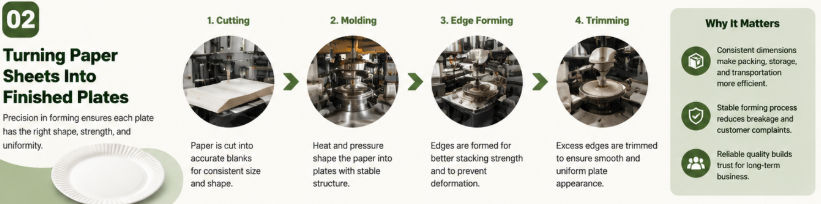
The forming stage is where flat paper materials become usable plates. Although the process looks simple, production accuracy has a direct impact on the final product.
The paper needs to be cut into the correct size before molding. If the paper blank is inaccurate, the finished plate may have uneven edges or inconsistent dimensions.
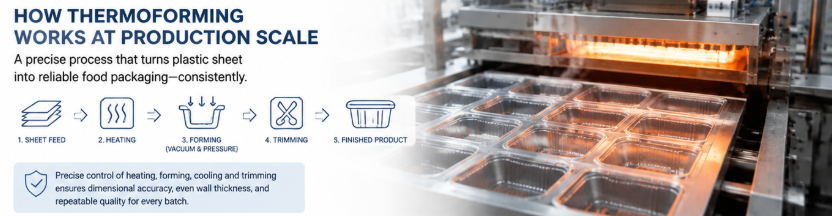
During molding, machines use heat and pressure to shape the paper. These settings must remain stable throughout production. Changes in temperature or pressure can affect the plate structure and create differences between batches.
For commercial buyers, production consistency is usually more valuable than a low initial price. A supplier that can maintain stable quality helps businesses avoid problems after products enter the market.
A professional paper plates manufacturer for food service businesses needs reliable production control because restaurants and catering companies often require repeated orders with the same specifications.
The edge structure of a plate is another important detail. A well-formed edge improves stacking strength and helps prevent deformation during storage and transportation.
Quality Inspection Before Shipment
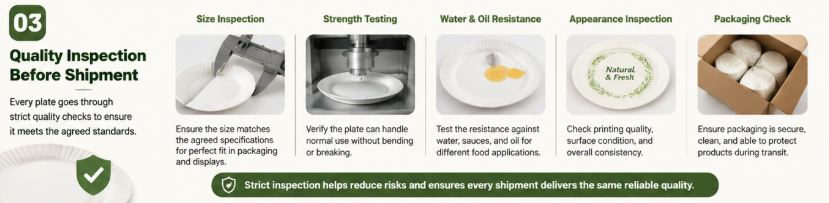
A finished paper plate still needs to pass quality checks before it reaches customers.
Size inspection ensures that products match the agreed specifications. This matters for companies that use standard packaging, automated packing systems, or retail displays.
Strength testing checks whether plates can handle normal usage conditions. A plate that fails during serving can create customer complaints and affect brand reputation.
Water resistance and oil resistance are also tested because different foods create different challenges. Plates used for fried food require different performance compared with plates used for dry snacks.
Appearance inspection is especially important for customized products. Printing quality, surface condition, and overall consistency influence how customers view the brand.
For distributors purchasing large quantities, choosing a bulk paper plates supplier with strict inspection procedures can help reduce quality risks and improve supply stability.
Custom Production For Different Business Applications
Many buyers today need more than standard paper plates. They may require different sizes, shapes, printing designs, or packaging methods to match their market.
For example, a restaurant chain may need branded plates with a specific appearance, while a retailer may need packaging designed for shelf display.
Customization also allows businesses to create products that better match customer expectations. The plate size, design, and packaging format can all influence purchasing decisions.
A reliable private label paper plates manufacturer can support businesses from product development to final production. This type of cooperation is useful for companies building their own disposable tableware brands or expanding product lines.
Choosing The Right Manufacturing Partner
Price is an important factor, but it should not be the only consideration when selecting a supplier.
A factory with lower prices may use different materials, have limited production capacity, or lack detailed quality control systems. These differences may create additional costs later through delays, complaints, or replacement orders.
Before cooperation, buyers should check whether the supplier has suitable equipment, stable production ability, and experience handling similar projects.
The ability to support repeat orders is also critical. A good supplier should maintain the same quality level instead of producing inconsistent results between shipments.
Communication efficiency matters as well. During production, buyers may need changes related to specifications, packaging, or delivery schedules. Quick and clear communication helps prevent unnecessary problems.
A dependable paper plate factory for international buyers should provide consistent manufacturing, flexible solutions, and reliable delivery support.
Final Thoughts
Making paper plates is not simply a process of pressing paper into shape. Every stage, from selecting materials to inspecting finished products, affects the quality that buyers receive.
For companies purchasing paper plates in bulk, understanding the manufacturing process helps them identify stronger suppliers and avoid common sourcing problems.
The right manufacturing partner should offer more than competitive pricing. Stable quality, production experience, and the ability to support different business needs are what create long-term value.