Paper plates are often chosen by restaurants, catering companies, and food brands because they seem like a simple step toward more responsible disposable tableware. They are made from paper, feel lighter than plastic alternatives, and are commonly associated with environmentally friendly packaging.
However, one question usually appears before large-volume purchasing decisions are made:
Are Paper Plates Recyclable?
The answer is not as straightforward as many buyers expect.
A paper plate leaving the factory and a paper plate after a customer finishes a meal are two completely different situations. During production, the plate may contain recyclable paper fibers. After use, it may be covered with oil, sauces, and food residue, which can completely change how waste facilities handle it.
For companies purchasing disposable tableware in bulk, recyclability is not only about the material name. It is related to the entire process, including product design, coating technology, customer usage, and local waste collection.
That is why choosing an experienced paper plates manufacturer for foodservice companies requires looking beyond basic product descriptions.
A Paper Plate Is Not Just Paper
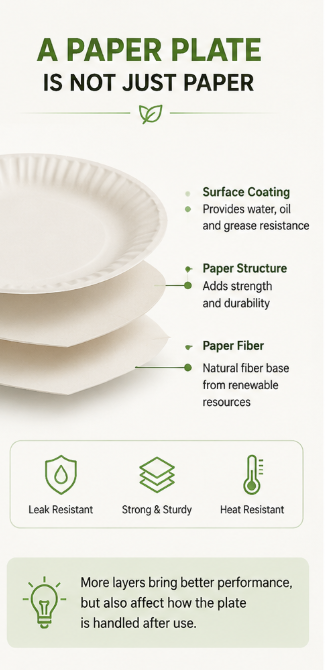
The word “paper” can create confusion.
Many buyers imagine a paper plate as similar to a piece of cardboard that can easily enter recycling bins. In reality, food containers need additional performance features because they are exposed to conditions that ordinary paper products never face.
A plate used for salad, snacks, or bakery products has different requirements compared with one used for oily meals, fried foods, or hot dishes with sauces.
Manufacturers adjust paper weight, fiber structure, and surface treatment depending on the application.
A thicker paper structure may improve strength. A surface barrier may prevent leakage. A special coating may help the plate maintain its shape during use.
These improvements are valuable for customers, but they also affect what happens after disposal.
When working with a custom paper plates supplier, buyers should ask about the complete material structure instead of only asking whether the product is “paper-based.”
The more layers a product contains, the more important it becomes to understand how those materials are handled after use.
The Coating Layer Often Decides the Recycling Result
For food packaging, coating is usually added for a reason.
Without protection, paper absorbs liquid quickly. A plate holding soup, gravy, or oily food may become soft and lose strength within a short time.
Coatings solve this problem.
They improve grease resistance and help maintain product performance during transportation, serving, and customer use.
The challenge is that not all coatings behave the same way after disposal.
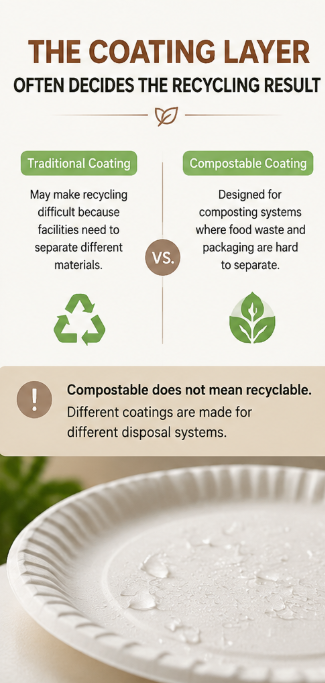
Some traditional barrier coatings can make recycling more difficult because recycling facilities need to separate different materials. In some regions, these products may not be accepted through normal recycling channels.
Compostable coatings provide another approach. They are designed for situations where composting systems are available and where separating food waste from packaging is difficult.
But compostable does not mean recyclable.
This is a point that often causes confusion during purchasing. A product can be a good choice for one disposal system and unsuitable for another.
A reliable compostable paper plates supplier should explain the intended disposal method clearly instead of using general environmental claims.
The Real Recycling Challenge Starts After Use
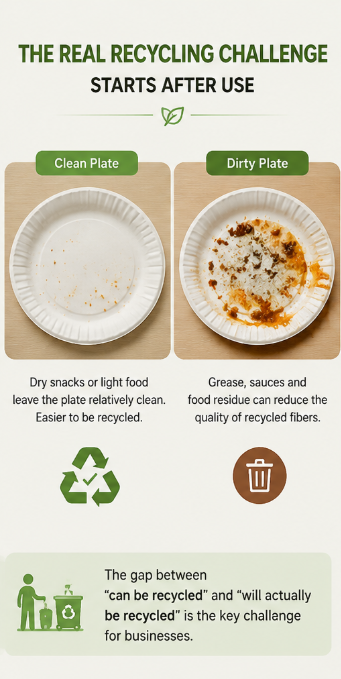
In commercial food service, the biggest issue is usually not the unused plate. It is what happens after the meal is finished.
Consider two situations.
A company event uses paper plates for dry snacks. Most plates remain relatively clean.
A restaurant serves barbecue, fried food, or dishes with heavy sauces. Plates leave the table with grease and leftovers attached.
Both products may come from the same production line, but their recycling possibilities can be very different.
Recycling facilities need suitable material quality. Excess food contamination can reduce the value of recovered paper fibers and increase processing difficulty.
This is why some paper plates that are technically recyclable are still sent to general waste in real situations.
The gap between “can be recycled” and “will actually be recycled” is an important issue for companies planning sustainable packaging strategies.
A professional paper plates factory should understand this difference and provide guidance based on where and how the product will be used.
Should Businesses Choose Recyclable or Compostable Paper Plates?
The answer depends on the operating environment.
For companies located in areas with strong recycling programs and effective waste separation, recyclable paper plates may be a suitable choice.
For catering businesses, outdoor events, and takeaway services, compostable options may sometimes make more sense because food contamination is difficult to avoid.
Neither option is automatically better.
A recyclable product may fail to reach recycling facilities if local collection systems are limited.
A compostable product may not achieve expected results if suitable composting infrastructure is unavailable.
This is why purchasing teams need to consider the final destination of the product, not only the material label.
An OEM paper plate manufacturer can often provide different material options, allowing companies to select products based on regional requirements, food applications, and customer expectations.
What Buyers Should Confirm Before Placing Large Orders
When companies purchase paper plates at wholesale quantities, several details deserve attention before production begins.
Material information is one of the first points to confirm.
Buyers should know:
What type of paper fiber is used?
Is there a coating layer?
What type of food applications is the plate designed for?
These questions help prevent problems after delivery.
Performance is another important factor. A plate that cannot handle the intended food type may create complaints, waste, and additional costs.
Food safety documentation should also be reviewed, especially for businesses supplying restaurants, supermarkets, or large catering groups.
For brands developing their own disposable tableware line, customization may also be important. Printing, sizing, packaging style, and product specifications can influence market positioning.
Working with a paper plate manufacturer for wholesale buyers gives companies more flexibility when developing products for different customer groups.
Questions to Ask Before Selecting a Paper Plate Supplier
Many purchasing mistakes happen because buyers focus mainly on unit price.
Price matters, but paper plates are part of a larger operating system. A cheaper product that performs poorly may create higher costs later.
Before choosing a supplier, companies should understand:
How is the plate produced?
What materials and coatings are used?
Can the supplier provide test documents?
Does the product match the target market’s disposal conditions?
Can the supplier support customized requirements?
A capable private label paper plates factory should be able to discuss these topics openly and provide information beyond a simple product catalog.
The right supplier relationship helps companies avoid choosing products that look suitable but fail in actual use.
Final Thoughts
Paper plates can be recyclable, but recyclability is not determined by the word “paper” alone.
The material structure, coating, food residue, and local waste system all influence the final result.
For foodservice companies and packaging buyers, the better question is not only:
“Can this paper plate be recycled?”
It is:
“Will this paper plate fit the waste system where our customers use it?”
Understanding that difference helps companies choose more suitable products, communicate sustainability claims more accurately, and avoid problems after purchase.
By cooperating with an experienced disposable paper plates manufacturer, businesses can select paper plates that balance food performance, customer expectations, and realistic disposal conditions.