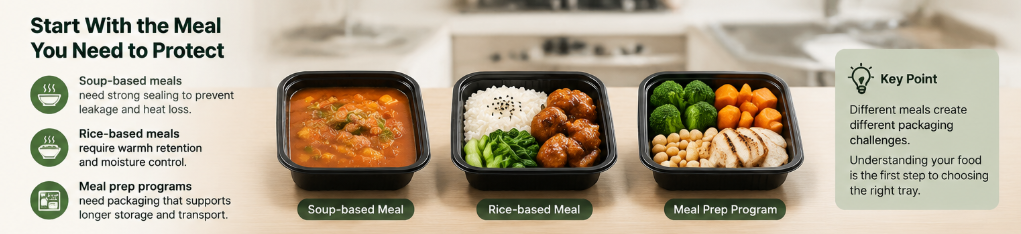
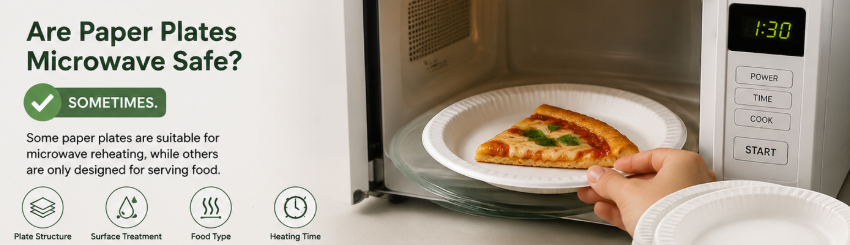
A compartment tray can look perfectly fine in a product catalogue. The trouble often starts after food is packed into it. A tray that holds rice, chicken, and vegetables without any problems at the factory may become difficult to handle after several minutes in a microwave. Sometimes the base loses its rigidity. In other cases, sauce escapes from one section and ends up mixing with the rest of the meal.
For ready meal manufacturers, these are practical purchasing concerns. Replacing an unsuitable tray after production has started is rarely convenient, especially when the packaging has already been matched to a filling line.
Know the Heating Conditions Before Choosing a Material

Start with the meal's journey. Is it sold chilled, kept frozen, or prepared for immediate consumption? Will customers heat it directly from the refrigerator, or take it out of a freezer first?
These details should be settled before requesting samples. A tray used for a refrigerated lunch may not be suitable for a frozen meal that goes straight into a microwave. Heating duration and microwave power also need to match the product's intended instructions.
When discussing specifications with a custom microwaveable compartment tray manufacturer, provide these details instead of asking for a generic microwave-safe container. A useful supplier should be able to identify the appropriate product range and explain its tested limitations.
PP and CPET Are Not Interchangeable
PP is commonly used for chilled prepared meals and microwaveable meal prep packaging. It is lightweight and generally economical for regular production. However, two PP trays can behave differently if their thickness, formulation, or forming quality is not the same.
CPET is often considered for frozen ready meals, particularly when conventional oven heating is also required. This makes it useful for certain meal formats, although its cost and design requirements should be considered before changing materials.
A PP compartment tray supplier may be a sensible starting point for chilled meals, while a CPET ready meal tray manufacturer may offer a more appropriate option for frozen products. Ask for the temperature limits of the finished container. A material specification alone cannot establish whether the package will withstand the intended heating cycle.
Make Sure the Compartments Match the Portions

The compartment layout should be decided around the food, not the number of sections available in a catalogue.
For example, a meal containing 250 g of rice, chicken, and vegetables needs a different layout from a lighter lunch with a small portion of pasta and salad. If the main compartment is undersized, food may be compressed during filling. If the dividing walls are too low, meat juices or dressing can move into neighboring sections.
Sauce deserves particular attention. A shallow compartment might be adequate for vegetables but unsuitable for gravy.
A three-compartment meal tray manufacturer should be able to discuss compartment dimensions and wall height based on actual portions. For OEM compartment food trays, it is worth preparing a filled sample before approving the mold. A small adjustment at the design stage is generally easier than changing tooling after production has begun.
Check the Base and Dividers After Microwave Heating

Do not judge a tray only by whether it melts or collapses. A more common concern is whether it remains practical to handle.
A heavily filled tray with a flexible bottom can bend when lifted. If the compartment walls soften, ingredients may move between sections. These problems can be missed when testing an empty container.
The food itself also affects heating results. Rice, meat, and vegetables have different moisture levels, so their heating times may vary. A compartment tray cannot guarantee uniform food temperature, but its dimensions and layout should not make preparation unnecessarily difficult.
Ask a microwave-safe PP tray factory for available heating test information. Then repeat the test using your own food portions and the specified heating instructions.
Check the Closure as Part of the Same Package
The lid is easy to overlook when most attention is given to the tray. Yet a poor fit can cause leakage during transportation, even if the container itself is structurally sound.
Some ready meals use snap-on lids, while others use heat-sealed film. The heating instructions must explain whether the lid should be removed or the film partially peeled back. Never assume that a closure is suitable for microwave use simply because the tray is.
For meals containing sauces or liquids, test the filled package rather than checking the empty lid against the rim. A custom CPET food tray supplier should confirm compatibility between the selected tray and its proposed closure.
Put Samples Through the Same Conditions as the Finished Product
A sample test is useful only when it resembles actual production and consumer use.
Fill the tray with the intended meal, apply the planned sealing method, and follow the proposed storage and heating instructions. If the meal is sold frozen, test it after freezing. If it is refrigerated, use the relevant storage conditions.
After heating, inspect the base, corners, and dividing walls. Check for leakage, excessive bending, and changes in compartment shape. Record the portion weight, heating duration, and microwave power so another sample can be evaluated under the same conditions.
For buyers sourcing compartment trays for ready meal packaging, this is a much better basis for comparison than photographs or empty samples. It also gives the supplier specific information if the design needs adjustment.
Look Beyond the First Approved Sample
A successful sample does not tell you everything about a supplier's production capability. Once an order reaches hundreds of thousands of pieces, small differences in dimensions or wall thickness can become noticeable.
Before ordering, request food-contact compliance documents, material specifications, and information about production inspections. If trays will run through automatic filling and sealing equipment, dimensional consistency is particularly important.
For private label microwaveable meal trays, discuss mold specifications and sample approval before confirming the order. A bulk compartment tray supplier should also explain how it checks repeat production batches against the approved sample.
A low unit price offers little advantage if trays cause sealing problems or need to be rejected during filling.
The right tray is the one that fits the meal and continues to perform after storage, transportation, and microwave heating. Buyers who settle the food portions, heating conditions, and closure requirements before ordering are less likely to discover expensive packaging problems after production has started.