Keeping meals warm during delivery sounds simple, but many food businesses discover that it is harder than expected. A meal can leave the kitchen at the right temperature and still arrive at the customer’s door with a different quality.
The problem is usually not caused by cooking. In many cases, the packaging does not match the way the food is prepared, transported, and served.
For a restaurant, losing heat means more than a lower temperature. Rice may become harder, sauces may lose their original texture, and fried foods may become soft because of trapped moisture. When these problems happen repeatedly, packaging becomes part of the customer experience.
Choosing food trays is therefore not only about finding a container that can hold food. It requires understanding how the meal will move through the entire process, from kitchen preparation to final delivery.
A reliable food tray manufacturer for commercial food applications usually looks at the complete usage environment instead of recommending a product only based on material.
Start With the Meal You Need to Protect
Before selecting a food tray, the first question should be about the food itself.
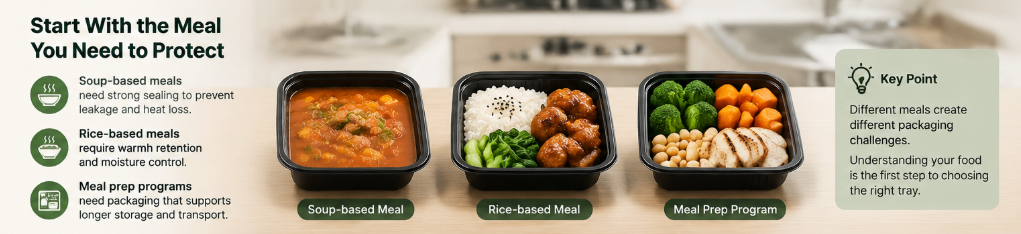
Different meals create different packaging challenges.
A soup-based meal, for example, needs strong sealing performance because leakage and heat loss often happen together. A tray with a secure lid connection helps maintain the internal environment during transportation.
Rice-based meals have another requirement. The packaging needs to protect warmth while controlling moisture. Too much steam staying inside the container may affect vegetables or fried ingredients, while too much ventilation can make the meal dry.
For meal prep brands, packaging performance is often judged after a longer period. The food may be prepared in advance, stored, transported, and opened later. In this situation, the tray needs to support both temperature retention and food quality.
Working with an oem food tray supplier for restaurant packaging projects allows buyers to discuss these real application details instead of simply choosing from standard sizes.
Delivery Distance Changes Packaging Requirements

A tray suitable for a nearby takeaway order may not work well for longer delivery routes.
For short-distance delivery, the main purpose of packaging is protecting the meal during normal handling. Restaurants may focus on reliable closing, reasonable cost, and easy storage.
When delivery time increases, small design differences become more noticeable. Heat escapes gradually through gaps, weak sealing points, and unnecessary air movement inside the package.
Catering operations usually have higher requirements because food is often prepared in large quantities before transportation. Trays need to maintain their shape when stacked and handled repeatedly.
The right choice depends on the actual workflow. A custom food tray manufacturer can adjust factors such as tray depth, thickness, and structure according to different food applications.
Material Choice Should Follow the Application
There is no single material that works best for every food business. Each option has strengths that fit different situations.
PP Food Trays for Hot Meals
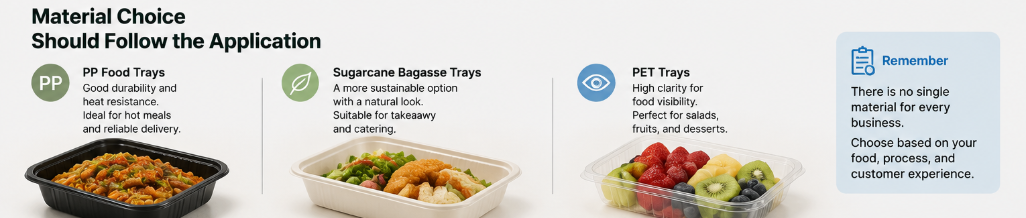
PP trays are commonly selected for hot food packaging because they provide good durability and heat resistance.
They are frequently used for rice meals, noodles, ready-to-eat dishes, and other products that require stable performance during transportation.
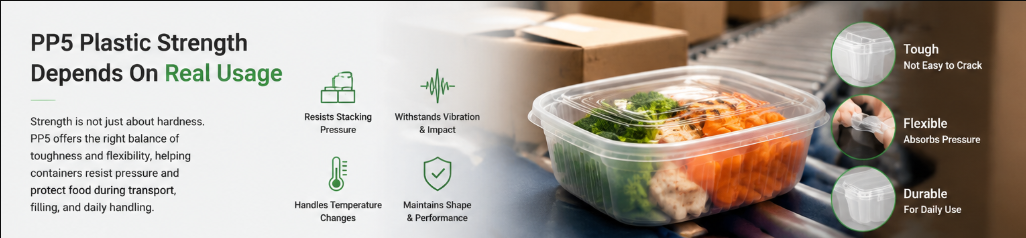
One important point is that the material itself does not decide the final result. Two PP trays may perform differently because of differences in wall thickness, design structure, and lid matching.
A tray that keeps its shape and works well with a secure lid can provide better protection during delivery.
For businesses requiring repeat orders and consistent quality, a pp food tray factory for bulk packaging requirements can provide better production stability and specification control.
Sugarcane Bagasse Trays for Sustainable Packaging Programs
Some restaurants and food brands choose sugarcane bagasse trays because they want packaging that supports a more sustainable brand image.
The natural appearance is attractive for businesses that want to communicate environmental responsibility. These trays are often considered for takeaway and catering applications.
But sustainability alone should not decide the purchase. Buyers still need to check moisture resistance, food compatibility, storage conditions, and transportation performance.
A sustainable food tray supplier for foodservice packaging solutions can help brands evaluate whether a material fits their operation rather than simply following a trend.
PET Trays for Food Visibility
PET trays are often used when product presentation is important.
Clear packaging allows customers to see the food directly, which is valuable for products such as salads, fruits, desserts, and chilled meals.
For hot food delivery, buyers should carefully consider whether this material matches their requirements. A tray designed for visibility may not always provide the same performance as packaging developed for heat retention.
The right choice depends on how the product will actually be used.
Tray Design Influences Real Performance
Material is only one part of the equation. The physical design of the tray can significantly affect transportation results.
A deeper tray may provide better support for heavier meals. Stronger side walls can reduce deformation when multiple trays are stacked together.
For combination meals, compartment design also matters. Separating different ingredients helps prevent sauces from mixing and reduces changes in food texture.
These details are often overlooked because they are less obvious than material names. But during daily operations, they can directly influence packaging reliability.
For large-volume buyers, working with a food tray factory for wholesale packaging solutions can make it easier to develop packaging that fits specific requirements.
The Lid Determines More Than Just Leakage Protection
Many buyers focus on the tray and treat the lid as an accessory. In reality, the lid often has a major impact on temperature control.
A loose connection allows heat and moisture to escape faster. It can also create problems during delivery, especially when food contains liquids or sauces.
A suitable lid should match the tray structure and provide reliable closing performance.
Different foods require different approaches. Some meals need stronger sealing, while others need controlled ventilation to avoid moisture buildup.
Testing the complete package is more valuable than checking the tray alone. A real evaluation should include hot food, actual filling levels, stacking conditions, and transportation time.
Common Problems During Food Tray Purchasing
Price is often one of the first factors buyers compare, but it should not be the only consideration.
A lower-cost tray may appear attractive during purchasing, yet poor performance can create additional costs later. Food leakage, customer complaints, and inconsistent quality can affect daily operations.
Another common issue is selecting packaging based on general trends. A material that works well for another business may not solve the problems faced by your own menu and delivery model.
Samples should also be tested in realistic conditions. Empty packaging cannot show how a tray performs after being filled with hot food and transported.
An experienced oem food tray manufacturer for international food businesses should be able to provide samples, discuss improvements, and support stable production after approval.
What to Review Before Ordering in Bulk
Before confirming a large food tray order, buyers should clearly understand their own requirements.
The food type, delivery time, storage environment, and expected customer experience all influence the final choice.
Sample testing should include the full packaging combination, including the tray, lid, food weight, and transportation process.
Supplier capability is another important factor. Consistent manufacturing, quality management, and the ability to support product adjustments can make a significant difference in long-term cooperation.
Choosing a food tray manufacturer serving global food packaging markets gives buyers a partner that can support not only production but also packaging decisions.
The Right Food Tray Supports Better Food Delivery
A food tray is not simply a disposable item used to hold a meal. It affects how customers experience the food after it leaves the kitchen.
The most suitable option depends on several factors working together: the type of food, delivery distance, material performance, structural design, and supplier capability.
Restaurants, catering companies, and meal preparation brands should focus on finding packaging that fits their operation instead of choosing based on a single specification.
When the tray design matches the actual business process, it becomes easier to maintain food quality, reduce complaints, and create a more reliable delivery experience.