When businesses evaluate food packaging materials, recyclability has become an increasingly important factor in purchasing decisions. However, the question “Is PP5 recyclable?” involves more than simply checking the recycling symbol printed on the bottom of a container.
For food brands, distributors, and packaging buyers, the real concerns are usually more practical. Can PP5 packaging enter an effective recycling system after use? Does polypropylene support sustainability goals in different markets? What packaging structures make recycling easier or more difficult? How should companies select the right material when balancing performance, cost, and environmental expectations?
The answer is that PP5 is technically recyclable, but actual recycling depends on many factors beyond the material itself. Collection systems, packaging design, contamination levels, and local recycling infrastructure all influence whether PP5 packaging can successfully return to the material cycle.
For companies sourcing food packaging, understanding these factors helps avoid choosing materials based only on environmental claims and supports better long-term packaging decisions.
What Is PP5 Plastic and Why Is It Widely Used in Food Packaging?

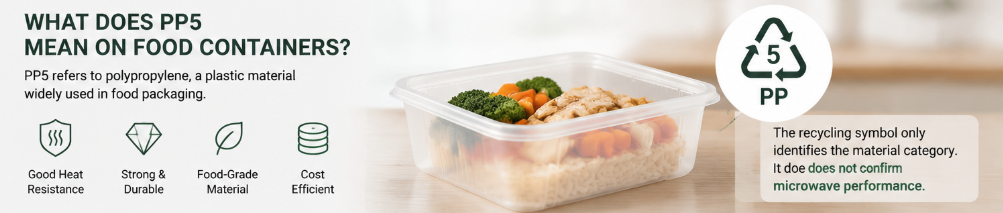
PP5 refers to polypropylene, a plastic material identified by the resin identification code number 5. It is widely used in food packaging because it offers a practical balance between heat resistance, durability, flexibility, and manufacturing efficiency.
Unlike some materials that are mainly selected for appearance, polypropylene is often chosen because it performs well in demanding food applications. It can maintain structural stability during filling, transportation, storage, and heating processes.
Common PP5 applications include ready-to-eat meal containers, microwave food packaging, takeaway boxes, dairy containers, and reusable storage products. For businesses working with a custom PP5 food container manufacturer, material selection is usually based on the complete application requirement rather than recyclability alone.
For example, food packaging used for hot meals requires different performance characteristics compared with packaging designed for cold products. PP5 is often preferred in applications where heat resistance and impact protection are important considerations.
Another reason PP5 remains popular is its manufacturing flexibility. Polypropylene can be processed into different shapes, sizes, and structures while maintaining consistent production quality. This makes it suitable for large-volume commercial packaging projects where stability and supply reliability are essential.
Is PP5 Actually Recyclable?
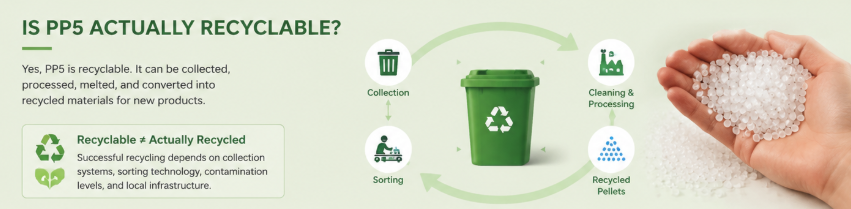
Yes, PP5 is recyclable from a technical perspective. Polypropylene can be collected, processed, melted, and converted into recycled plastic materials. These recycled materials can then be used for producing various plastic products.
However, there is an important difference between being recyclable and being successfully recycled.
A PP5 container may have recycling potential, but whether it is actually recycled depends on the complete recycling system. If local collection programs do not accept polypropylene or recycling facilities lack suitable sorting equipment, the packaging may still end up in general waste streams.
This is why companies should look beyond the recycling symbol when evaluating packaging materials. A recyclable material does not automatically guarantee a successful recycling outcome.
For a PP5 recyclable packaging supplier, supporting customers with accurate material information, clear specifications, and responsible packaging design is becoming increasingly important. Buyers need to understand not only what the material can do technically but also how it performs within real recycling environments.
How Does PP5 Plastic Recycling Work in Real Applications?
The PP5 recycling process involves several stages, and each stage affects the final recycling result.
After PP5 packaging is collected, it first enters a sorting process where different plastic types are separated. Recycling facilities need to distinguish polypropylene from materials such as PET, HDPE, or PS because each polymer requires different processing conditions.
After sorting, PP packaging is cleaned to remove food residues, labels, and other contaminants. The cleaned material is then shredded, processed, and converted into recycled plastic pellets.
These recycled pellets can be used to manufacture new plastic products. Depending on local regulations and quality requirements, recycled PP may be applied in industrial packaging, household products, automotive components, and other plastic applications.
However, recycling efficiency depends heavily on the original packaging design. Packaging that contains unnecessary mixed materials or difficult-to-remove components may increase processing complexity.
For businesses purchasing packaging from an OEM PP5 container factory, understanding the recycling process helps evaluate whether the product design supports future recycling instead of creating additional challenges after disposal.
Why Some PP5 Packaging Is Not Successfully Recycled
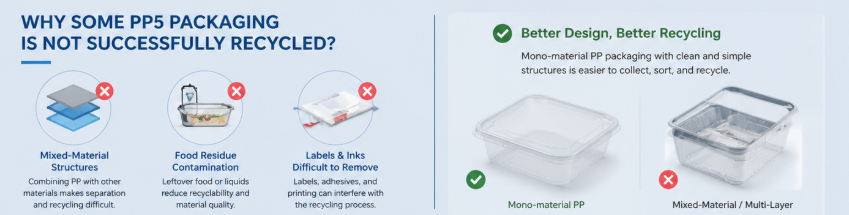
Although PP5 has recycling potential, not every polypropylene product successfully enters the recycling stream. In many cases, the challenge comes from packaging structure and usage conditions rather than the material itself.
One major issue is mixed-material packaging. Some products combine PP with other plastics, metal parts, or multilayer structures. While these designs may provide certain functional benefits, they can make separation more difficult during recycling.
Mono-material packaging is generally easier to identify and process because recycling facilities can handle it more efficiently. This is why many companies are reviewing packaging structures during the design stage rather than focusing only on the final appearance.
Another challenge is contamination. Food packaging often contains oil, sauces, grease, or leftover food particles. Heavily contaminated packaging requires additional cleaning processes and may reduce the economic value of recycling.
Packaging size and design details can also affect recycling performance. Small components, unnecessary attachments, or complex structures may create difficulties for automated sorting systems.
For companies working with a PP5 food packaging manufacturer for international markets, considering these factors early can help create packaging that performs well during both product use and potential recycling processes.
PP5 Compared With Other Packaging Materials
Choosing a sustainable packaging material requires more than comparing recycling labels. Different materials offer different advantages depending on the application.
PET is widely recognized for its established recycling infrastructure in many markets and is commonly used when product visibility is important. Its high transparency makes it suitable for retail display applications.
PLA is often selected by companies looking for compostable packaging options. However, compostable materials usually require specific industrial composting conditions to achieve the expected environmental benefits.
PP5 provides advantages in applications where durability and heat resistance are important. It is commonly used for food containers that need to withstand higher temperatures or maintain structural stability during handling.
A professional PP5 packaging manufacturer for bulk packaging projects usually helps customers evaluate the overall application instead of promoting one material as suitable for every situation.
The most appropriate material depends on factors including food type, temperature requirements, logistics conditions, market regulations, and end-of-life considerations.
What Should Buyers Check Before Choosing PP5 Packaging?
For companies sourcing food packaging, recyclability should be considered during the early purchasing and design stages.
The first consideration is material structure. Buyers should confirm whether the packaging uses a simple PP structure or includes additional materials that may affect recycling compatibility.
The second consideration is supplier transparency. Packaging buyers should understand material composition, production standards, and available documentation before starting large-scale purchasing.
The third consideration is market requirements. Recycling systems vary between countries and regions, so packaging strategies should match the conditions of the target market.
Working with an experienced PP5 container supplier for food industry applications allows buyers to discuss material selection, product design, and market expectations before production begins.
For international buyers, this cooperation can reduce risks related to compliance, packaging performance, and sustainability communication.
How Manufacturers Can Improve PP5 Recycling Compatibility
Manufacturers play an important role in improving the practical recyclability of PP5 packaging.
One key approach is maintaining consistent material selection. Stable resin quality and controlled production processes help ensure that packaging performance remains predictable throughout its lifecycle.
Another important factor is packaging design. Reducing unnecessary components, avoiding difficult-to-separate materials, and improving structural simplicity can make PP packaging more compatible with recycling systems.
Manufacturers can also support customers by providing technical documents, material declarations, and production information. These details help brands communicate packaging characteristics more accurately throughout their supply chains.
For companies searching for a private label PP5 packaging factory with sustainable production capabilities, evaluating manufacturing practices is just as important as reviewing the final packaging design.
A responsible supplier should understand not only how to manufacture products efficiently but also how packaging choices influence future recycling opportunities.
What Does PP5 Recycling Mean for Sustainable Packaging Strategies?
Sustainable packaging decisions require a balance between environmental goals and practical business requirements.
Companies must consider multiple factors, including food safety, product protection, manufacturing efficiency, transportation conditions, and regulatory expectations.
PP5 should not be considered a perfect solution for every packaging challenge. Instead, it is one material option that provides valuable performance advantages in specific applications.
When combined with responsible design and suitable recycling systems, PP5 packaging can support a more circular approach to plastic use.
Modern packaging buyers are increasingly looking for suppliers who understand the complete product lifecycle rather than focusing only on production output.
A reliable PP5 food container supplier for global brands can help customers evaluate packaging choices from material selection to practical application, creating solutions that meet both business requirements and sustainability expectations.
Is PP5 the Right Choice for Your Packaging Needs?
PP5 is recyclable, but successful recycling depends on more than the material itself. Packaging design, local recycling infrastructure, contamination control, and responsible manufacturing all influence the final outcome.
For businesses selecting food packaging, the key question is not only:
“Can PP5 be recycled?”
A more valuable question is:
“Is this PP5 packaging designed for real-world use, efficient production, and future recycling systems?”
By considering material performance, supplier capability, and recycling compatibility together, companies can make more informed packaging decisions.
Choosing a suitable custom PP5 packaging supplier for commercial applications means finding a partner who understands not only how to manufacture polypropylene packaging but also how packaging fits into the changing global recycling landscape.