When companies start looking for egg packaging, capacity is usually one of the first things they want to know.
How many eggs can one tray hold?
For consumers, this question has a simple answer. For packaging buyers, the situation is different. The number of eggs inside a tray affects transportation, storage, product pricing, and the way eggs are sold in different markets.
A farm supplying thousands of eggs every day does not think about packaging in the same way as a supermarket selling small retail packs. One needs efficiency during transportation, while the other needs convenience for customers.
This is why many bulk buyers work with an egg tray manufacturer for wholesale supply that can provide different capacities instead of choosing only one standard option.
Common Egg Tray Sizes Used in the Market
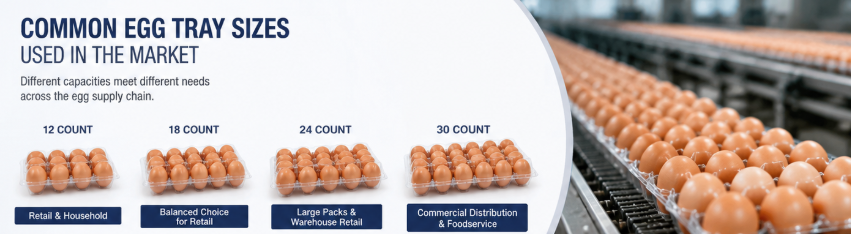
Most commercial egg trays are available in 12, 18, 24, and 30-count formats. These sizes are widely used because they fit different stages of the egg supply chain.
The 12-count egg tray is one of the most familiar formats for retail sales. Supermarkets, grocery stores, and direct-to-consumer brands often use this size because customers already understand it.
It is convenient to carry and suitable for household purchases. For brands selling premium eggs, organic eggs, or specialty products, a smaller package can also create a cleaner shelf appearance.
The limitation is transportation efficiency. When the same quantity of eggs needs to be shipped, more trays are required, which means more handling and more storage space.
The 18-count egg tray is often used as a middle option. It provides more eggs per package while remaining acceptable for retail customers.
Many supermarkets and regional suppliers choose this format because it balances customer demand with packaging efficiency.
When a company needs different sizes, structures, or designs for specific markets, an OEM egg tray supplier for retail packaging can help develop a suitable solution instead of using a fixed standard product.
The 24-count egg tray is usually selected for larger household packs and warehouse-style retail. It reduces the number of packages required during transportation and can improve storage efficiency.
The 30-count egg tray is more common in commercial distribution. Farms, wholesalers, and foodservice suppliers often choose this size because moving more eggs with fewer trays simplifies daily operations.
However, a larger tray is not always better. The best format depends on how the eggs will be transported and sold after leaving the production facility.
Why Different Businesses Choose Different Capacities
Egg packaging follows the needs of the supply chain.
For farms, the main concern is usually movement efficiency. When a large number of eggs leave the facility every day, reducing unnecessary packaging units can make loading and handling easier.
For distributors, flexibility matters more. They may supply supermarkets, restaurants, and other buyers at the same time, so they often need packaging options that fit different customers.
Retailers look at the product from another angle. A package that works well for transportation may not always match consumer shopping habits.
For example, a 30-count tray may be ideal for a distributor but inconvenient for a customer buying eggs for a small household.
This is the reason there are multiple egg tray capacities in the market. Each format solves a different problem.
A plastic egg tray factory for bulk orders usually evaluates the application first because capacity alone does not determine whether a package will work successfully.
Larger Capacity Does Not Always Mean Lower Cost

Many buyers compare egg trays by looking at the price of one piece.
This can lead to inaccurate decisions.
A larger tray usually has a higher unit price, but the cost per egg may be lower because fewer trays are needed. Transportation and labor costs may also decrease when more eggs are packed together.
However, packaging efficiency is not only about putting more eggs into one tray.
A larger package may not match the sales channel. A supermarket selling household packs may find smaller formats easier to sell, even if larger trays offer better shipping efficiency.
Breakage is another factor. If a tray design cannot properly protect eggs during transportation, the initial savings may disappear.
A good egg tray supplier for commercial packaging solutions looks at the complete process, including shipping, storage, handling, and final sales.
Egg Size and Tray Structure Need to Match
Capacity is only one specification buyers need to confirm.
Egg size is equally important.
A tray designed for smaller eggs may not perform well with larger eggs. Too much pressure inside the compartment can increase the chance of damage during transportation.
On the other hand, if the compartment is too large, eggs may move around and lose stability.
Before placing large orders, buyers usually confirm egg dimensions, average weight, and transportation conditions.
This is especially important for international purchases because egg sizes can vary between regions.
For projects requiring special dimensions or structures, a custom egg tray manufacturer for commercial packaging can adjust the design according to actual product requirements.
Material Choice Also Affects Performance
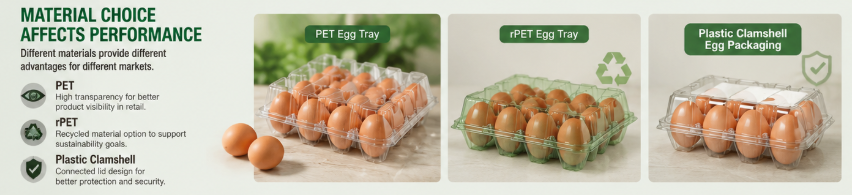
Different materials provide different advantages depending on the market.
PET egg trays are often selected when visibility is important. The transparent structure allows customers to see the eggs clearly, which is useful for retail environments.
rPET egg trays are becoming more common among companies that want recycled material options.
Plastic clamshell egg packaging provides additional protection through a connected lid design, making it suitable for applications where product security and appearance are both important.
The material decision should match the purpose of the packaging. A supermarket product, an export shipment, and a foodservice supply program may require different solutions.
Companies focusing on sustainability may work with an rPET egg tray manufacturer for recycled packaging projects to meet environmental requirements while maintaining product performance.
Problems Buyers Often Overlook
One common mistake is choosing packaging only because the price looks attractive.
A cheaper tray may create additional costs if it causes more breakage or requires inefficient transportation.
Another mistake is selecting capacity without considering the customer.
Wholesale buyers and retail shoppers have different expectations. The same tray design may work well in one market but create problems in another.
Testing before mass production is also important. Checking egg fit, stacking performance, and transportation conditions can prevent unexpected issues after delivery.
For international orders especially, communication with suppliers matters. Clear specifications help avoid differences between samples and final production.
A capable egg tray packaging factory for export markets can support testing, production adjustment, and stable supply.
Finding a Suitable Egg Tray Supplier
For companies purchasing packaging regularly, the supplier relationship becomes part of the product strategy.
Capacity requirements may change as markets develop. A company that starts with retail packaging may later need larger formats for distribution.
Working with a supplier that understands different applications makes future adjustments easier.
An OEM egg tray factory for global packaging buyers can support different projects, from standard production to more specific packaging requirements.
Final Thoughts
Standard egg trays commonly hold 12, 18, 24, or 30 eggs, but the correct capacity depends on how the packaging will be used.
A retail brand may prefer smaller formats because they fit consumer habits. A farm or distributor may choose larger trays because they improve transportation efficiency.
The important point is that egg tray capacity is not only a number. It is connected with logistics, sales, protection, and overall operating costs.
For companies purchasing egg packaging in bulk, choosing the right capacity means finding a format that works throughout the entire supply chain.