It is easy to assume that a paper food box can go straight into the microwave. After all, paper does not seem like the kind of material that would cause a problem.
But if you have ever received takeaway food in a paper container, you may have wondered whether it is actually safe to reheat the food without transferring it to a plate.
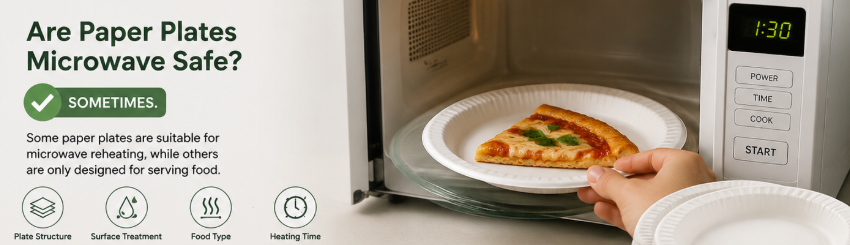
The short answer is: sometimes, but not every paper box is microwave safe.
The important question is not simply whether the package is made from paper. You also need to consider its coating, lid, printing, adhesive, food type, and the heating conditions recommended by the manufacturer.
For restaurants, meal-prep companies, and food brands, this distinction matters even more. A container that works for transporting food may not necessarily be designed for microwave reheating.
How to Tell If a Paper Box Is Microwave Safe

The first thing to check is the packaging itself. Look for wording such as “microwave safe,” “microwaveable,” or specific heating instructions from the manufacturer.
If the box says that it can be microwaved, follow the stated conditions rather than treating the label as permission for unlimited heating. Some packaging is intended for short reheating rather than prolonged cooking.
If there is no microwave information at all, it is better not to make assumptions based on appearance.
This is particularly important when buying packaging in bulk. A custom paper box manufacturer should be able to tell you whether a particular structure is intended for microwave reheating and what limitations apply to it.
The Food Inside the Box Matters Too

Even when a box is designed for microwave use, the food inside can change what happens during heating.
Rice, noodles, vegetables, and other high-moisture foods produce steam. Fried chicken, pizza, sauces, and other oily foods can become much hotter in localized areas. A container that performs well with one type of food may behave differently with another.
This is why a good packaging specification should consider the actual application rather than simply stating “food grade.”
For example, a restaurant serving hot noodles may have different requirements from a company selling chilled ready meals. A microwaveable paper box supplier should therefore understand the food application, expected heating conditions, and required holding time before recommending a structure.
What About the Lid?

The lid is one of the easiest parts to overlook.
A paper container may be microwave compatible while its lid requires different handling. Some lids are designed to be removed before heating, while others may be suitable for reheating when properly vented.
A tightly closed container can also trap steam. That can cause pressure buildup, condensation, deformation, or messy splashing when the package is opened.
For this reason, never assume that “microwave safe container” automatically means “microwave the entire package exactly as delivered.”
If you are developing packaging for takeaway or ready-to-eat meals, a paper food box supplier for takeaway packaging should be able to clarify whether the lid, coating, and container are intended to be used together during reheating.
How Long Can You Microwave Food in a Paper Box?

There is no universal microwave time that applies to every paper box.
Microwave power, food composition, starting temperature, portion size, and packaging construction can all affect the result. A box designed for briefly reheating refrigerated food should not automatically be treated as suitable for extended high-power heating.
For commercial applications, this becomes a specification issue rather than a guess.
A paper box manufacturer for ready meal packaging may need to consider the complete heating scenario, including whether food goes from refrigeration directly into the microwave, how much food each container holds, and whether the package needs to remain structurally stable after heating.
The goal is not simply to make a box that survives the microwave. It needs to perform properly throughout the customer's actual use.
Which Paper Boxes Should Not Go in the Microwave?
A paper appearance does not guarantee microwave compatibility.
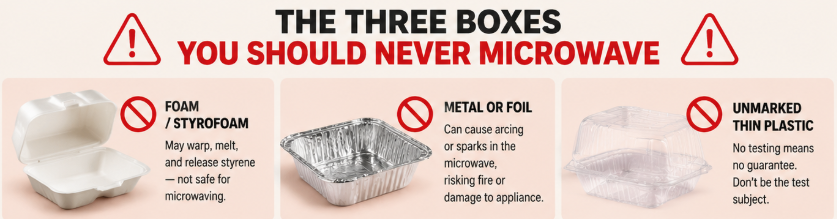
Packaging containing foil or other metal elements should not be treated as ordinary microwave-safe paper packaging. Metallic decorations, handles, or other components can also create problems.
Coatings deserve attention as well. A paper box may contain a barrier layer designed to improve grease or moisture resistance. That layer is part of the packaging system and should be evaluated for the intended heating application.
The same applies to adhesives, inks, and labels.
For businesses purchasing large quantities, asking whether the package is simply “food safe” is not enough. A microwave paper box factory should be able to distinguish general food-contact suitability from suitability for the specific heating application.
What Should You Ask Your Packaging Supplier?
Before placing a large order, ask questions that relate directly to how the box will be used.
You can ask whether the complete container is microwave safe, whether the lid can remain attached during heating, what heating conditions were used for evaluation, and whether there are restrictions for oily or high-moisture foods.
You can also ask about the coating and other components rather than looking only at the paper itself.
For buyers developing their own packaging, an OEM paper food container supplier can also be asked whether the structure can be adjusted for a particular microwave application. This may include changes to dimensions, venting, coating, closure design, or overall construction.
These questions are much more useful than choosing a package simply because it looks suitable.
Choosing Paper Packaging for Commercial Microwave Reheating

For a restaurant, meal-prep brand, or prepared-food business, microwave compatibility is only one part of the decision.
The box still needs to hold the food securely during transportation, resist grease and moisture, stack efficiently, and maintain enough strength when hot. Branding and storage requirements may matter as well.
That is why a paper takeaway box factory for foodservice applications should evaluate the package around the complete use case instead of treating microwave performance as an isolated feature.
A good specification might begin with the food, portion size, storage temperature, heating method, expected heating time, and lid requirements. The packaging structure can then be selected around those conditions.
The Simple Rule for Microwaveable Paper Boxes
If the manufacturer clearly states that the paper box is microwave safe, follow the manufacturer's instructions.
If there is no microwave guidance, do not assume that paper automatically makes the container suitable for reheating.
And if you are sourcing packaging for commercial use, ask about the entire packaging system—not just the paper.
A custom paper food packaging manufacturer for food brands can help match the box structure to the actual application, while an OEM paper box supplier for bulk orders can provide specifications suited to larger production requirements.
Ultimately, the best microwaveable paper box is not simply one that can enter a microwave. It is one that has been designed around the food, heating conditions, lid, coating, and handling process your customers will actually use.