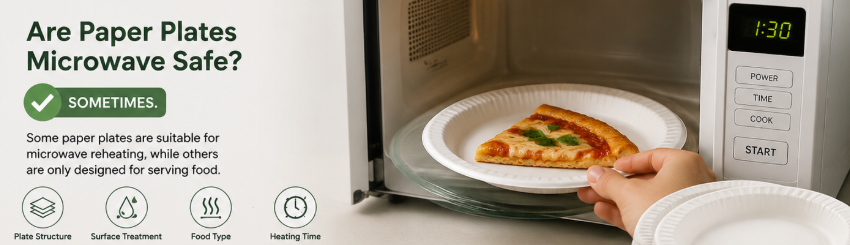
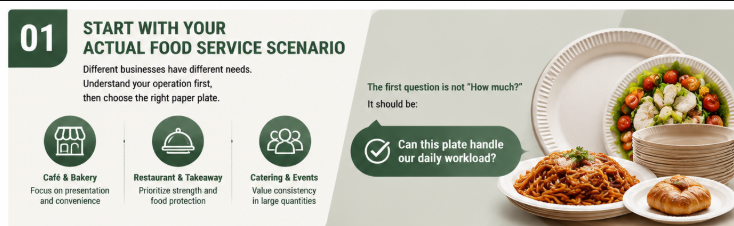
A paper plate looks simple enough: a shaped piece of paper designed to hold food and then be discarded. But for foodservice operators, distributors, and packaging buyers, the more useful question is not simply whether paper plates are “safe.” It is whether a particular plate is suitable for the food it will contact and whether the manufacturer can support that claim with proper documentation.
The paper itself is only part of the product. Coatings, inks, additives, adhesives, manufacturing conditions, and food-contact requirements can all affect the final result. This is why choosing a paper plates manufacturer should involve more than comparing unit prices or checking whether a product is described as “food grade.”
What Actually Makes a Paper Plate Food-Safe?

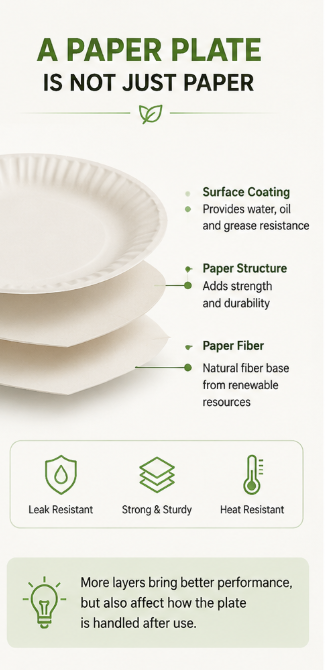
A food-contact paper plate generally consists of more than paper. Depending on its design, it may include a paper or board substrate, a barrier coating, printing inks, adhesives, or other functional materials.
For a custom paper plates supplier, controlling these components is an important part of maintaining consistent product quality. The question for buyers is not whether each material sounds harmless on its own, but whether the finished product is appropriate for its intended food-contact application.
A useful starting point is to identify which surface actually touches the food and determine what materials are present on that surface. A plate intended for dry snacks may have different requirements from one designed for greasy meals or foods containing sauces.
This distinction matters because “food grade” is often used broadly in commercial conversations. It should not replace specific information about the materials, intended application, and applicable food-contact requirements.
Where Can Potential Health Risks Come From?
Potential concerns can arise from several parts of the product rather than from the paper substrate alone.
Paper and Material Processing
Paper manufacturing can involve additives and processing chemicals. This does not mean that ordinary paper automatically presents a health risk. Materials intended for food contact are subject to specific requirements depending on the market and application.
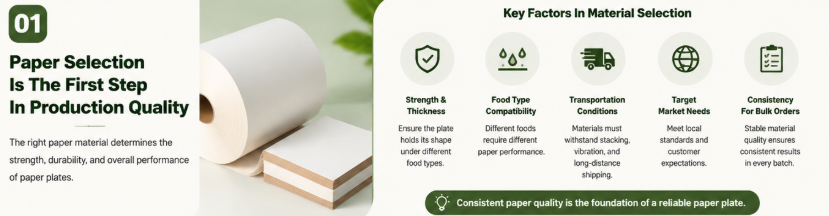
For buyers working with a paper plate factory for foodservice packaging, the more practical question is how the raw materials are controlled and documented. Consistent sourcing, traceability, and quality control are more meaningful indicators than simply choosing a product because it looks clean or feels thick.
Coatings and Barrier Materials
Many paper plates use a coating or barrier layer to improve resistance to moisture, grease, or other food-contact conditions. That layer deserves attention because it becomes part of the product's food-contact construction.
When evaluating OEM paper plates for restaurant chains, buyers should ask what coating is used, where it is applied, and whether the material is intended for the proposed application. The coating should not be treated as an invisible technical detail; its composition and performance can influence both product functionality and food-contact assessment.
Printing Inks and Adhesives
Branding creates another consideration. Printed graphics are common on foodservice products, but printing materials should be appropriately controlled, particularly when printed areas are close to food-contact surfaces.
For a private label paper plates supplier, this becomes especially relevant when customers request logos, detailed graphics, or full-surface printing. Ink placement, migration considerations, and set-off during storage should be evaluated as part of the finished product rather than considered separately.
Does the Type of Food Affect Paper Plate Safety?

Food-contact conditions are not identical across applications. The same plate may perform differently when used with dry snacks, oily fried foods, wet ingredients, or acidic sauces.
Greasy Foods
Foods such as fried chicken, fries, pizza, and other high-fat products place greater demands on the plate's grease barrier. If the barrier is poorly matched to the application, oil can penetrate the material and affect the plate's surface and structure.
A paper plates supplier for catering businesses should therefore be able to explain the intended application of the product rather than providing a generic statement that the plate is suitable for “all foods.”
Wet and Acidic Foods
Moist foods and foods containing sauces can create different contact conditions. Acidic ingredients, including tomato-based or vinegar-containing foods, may also require appropriate material compatibility.
The practical question is not whether these foods are inherently dangerous. It is whether the selected paper, coating, and finished construction have been evaluated for the conditions in which the plate will actually be used.
Can Substances From a Paper Plate Migrate Into Food?

One of the most relevant technical questions behind food-contact safety is migration: whether substances from a food-contact material can transfer into food under specified conditions.
Migration assessment can consider factors such as the type of food, contact duration, temperature, and material composition. Testing may involve food simulants and defined test conditions rather than every possible real-world food.
For a foodservice paper plates manufacturer, this is why finished-product specifications and relevant testing can be important. A test performed on one material does not necessarily answer every question about a finished plate containing a different coating, printing system, or construction.
For buyers, the useful question is therefore not simply, “Does this product have a test report?” It is, “Do the test conditions and tested product correspond to my intended application?”
Does “Food Grade” Mean a Paper Plate Is Safe?

Not necessarily by itself. “Food grade” is useful commercial language, but it can be too vague to serve as the only basis for procurement.
A paper plates factory for bulk orders should be able to provide more specific information about the product's materials and relevant compliance documentation. Depending on the destination market and product construction, this may include material specifications, declarations, and applicable food-contact test reports.
Buyers should also distinguish between documentation for an individual raw material and evidence relating to the finished plate. A compliant paper substrate does not automatically address every component added later during manufacturing.
How Should Buyers Evaluate a Food-Safety Test Report?
A test report is most useful when it can be connected directly to the product being purchased.
Check whether the tested material matches the current paper specification. Confirm that the coating, printing, and product construction are consistent with the production version. The test conditions should also make sense for the intended food-contact application.
This is particularly important when purchasing OEM disposable paper plates for distributors, where a supplier may offer several similar products with different coatings or specifications. Similar appearance does not necessarily mean identical material construction.
Traceability also matters. Product identification, testing laboratory, test date, applicable requirements, and other relevant information can help buyers determine whether the documentation is current and applicable.
What Should You Ask a Paper Plate Supplier Before Ordering?

A reliable purchasing process should begin with the application rather than the catalog.
Tell the supplier what type of food the plate will hold and describe the expected contact conditions. Then ask for the material structure, coating information, relevant food-contact documentation, and supporting test reports.
For buyers sourcing from an export paper plates manufacturer, it is also important to confirm that the documentation corresponds to the destination market and that the product supplied in bulk will follow the same specifications as the samples evaluated during the approval process.
The goal is not to collect the largest number of certificates. It is to establish a clear connection between material, food application, testing, and production control.
How to Decide Whether a Paper Plate Is Safe for Your Application
Paper plates should not be judged safe or unsafe simply because they are made from paper. A better assessment looks at the complete product and its intended use.
Start with the food-contact surface. Identify the paper, coating, inks, and other relevant components. Consider the characteristics of the food, then review whether the available compliance documentation and testing support that application. Finally, confirm that the supplier has adequate quality and traceability controls to reproduce the same specification consistently.
For businesses placing recurring orders, this approach is far more useful than relying on the phrase “food grade” alone. A properly evaluated product should have a clear material structure, an appropriate application, and documentation that supports its intended food contact.
In the end, the better question is not simply “Are paper plates safe?” It is:
Is this specific paper plate, made with these materials, suitable for the food application I need—and can the supplier demonstrate why?