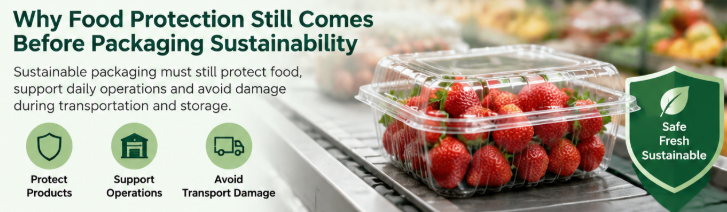
A fresh produce clamshell can look perfectly fine when it leaves the packing line and still cause problems a few days later. Strawberries may arrive with soft spots, blueberries may show moisture inside the lid, or containers at the bottom of a carton may become deformed during transport. When these issues appear, the packaging is often blamed first.
In practice, the cause is not always that simple. Ventilation, moisture retention, and structural strength affect one another, and a change intended to fix one problem can create another. For produce buyers, the challenge is finding a container that works with the fruit, the cold chain, and the way the products are packed and shipped.
Start With the Problems Your Current Packaging Creates

Before changing the container, look at what happens to the fruit between packing and delivery. If the main complaint is condensation, adding more ventilation holes may seem like an obvious fix. But if the fruit is losing weight and firmness, increasing airflow could make matters worse.
The type of produce also changes the decision. Strawberries need enough support to limit bruising, while blueberries can be damaged by excessive pressure when containers are stacked. Grapes have different handling and moisture requirements again. A design that works for one product should not automatically become the standard for another.
When discussing a new design with a custom fresh produce clamshell manufacturer, provide more than the required container dimensions. Explain the fruit variety, fill weight, packing temperature, expected storage period, and typical shipping conditions. If you already have a package that performs poorly, share photographs and explain when the damage first appears.
These details give the supplier something concrete to work with. Without them, a recommendation for larger vents or thicker walls is little more than guesswork.
Find the Right Amount of Ventilation

Ventilation is important, but more openings do not necessarily mean better produce quality. Air needs to move through the package effectively, especially during cooling. At the same time, excessive airflow under dry conditions can increase moisture loss.
Start by examining the existing vent layout. Are the openings positioned where air can actually reach the produce? Do they become blocked when the container is filled? Once several clamshells are packed into an outer carton, do the ventilation paths still work?
These are practical questions to raise with a vented berry clamshell supplier. The total number of holes is only one part of the design. Their size, position, and relationship to the carton openings can make a considerable difference to airflow.
It is also worth comparing the current container with a sample that has a modified vent pattern. Keep the fruit weight, cooling conditions, and storage time the same. Record temperature changes and check the fruit for visible moisture, weight loss, and changes in firmness.
The results may show that the original package needs better airflow distribution rather than a larger total opening area. That distinction matters because changing the hole pattern may solve the problem without unnecessarily weakening the container.
Deal With Condensation at Its Source
Water droplets inside a clamshell do not automatically mean the package has too few ventilation holes. Condensation often develops when temperatures change and moist air comes into contact with a colder surface.
Consider a shipment that leaves a refrigerated facility and is later exposed to warmer air. Moisture may form on the lid even if the package performed well during storage. If the fruit was packed before adequate precooling, the problem may begin much earlier in the supply chain.
For this reason, a refrigerated produce packaging supplier should consider the complete handling process rather than treating the container as an isolated product.
Buyers should check when condensation appears, whether droplets collect directly above the fruit, and whether water remains in contact with the produce. These observations help distinguish a packaging design issue from temperature fluctuations or inadequate cooling.
Material selection also deserves attention. Different plastics have different moisture-vapor transmission characteristics, but choosing a material with a particular barrier property does not guarantee that condensation will disappear. The result depends on the product and its surrounding conditions.
A useful sample test should therefore track two things together: moisture accumulating inside the package and moisture being lost from the fruit. Reducing one at the expense of the other is not a satisfactory outcome.
Keep the Container Strong Enough for Shipping

Ventilation changes can affect the parts of a clamshell that carry the load. Openings placed too close to hinges, locking tabs, or heavily stressed areas may leave the container more vulnerable to deformation.
This becomes especially important when filled packages are stacked in shipping cartons. If the lid bends inward, fruit near the top may be pressed against the cover. A closure that works on an empty sample may also become less reliable once the container is filled and handled repeatedly.
When evaluating an OEM clamshell packaging factory, ask how the proposed design performs under loaded conditions. Check the base, lid, hinges, and locking points rather than judging the container by its appearance alone.
Wall thickness is only part of the answer. The shape of the container, the distribution of material after forming, and the placement of structural ribs all influence performance. Simply making the entire package thicker may increase material costs without addressing the weakest area.
For a wholesale fruit container manufacturer, the more useful task is to identify where additional strength is genuinely needed and where material can be used more efficiently.
Test the Package Before Committing to Production
A sample that looks promising on a desk is not enough to establish whether it will work in distribution. Buyers should test the package with the actual produce, at the intended fill weight, under conditions that reasonably reflect the shipping route.
Keep the current container as a reference. Then compare it with a revised design, changing one major feature at a time where possible. This makes it easier to identify whether a different vent pattern or stronger base has improved the result.
During testing, record condensation, fruit weight loss, visible bruising, container deformation, and closure failures. Check the packages after transport simulation and, where relevant, again after the expected retail display period.
A custom molded produce packaging supplier should be able to discuss the design variables being tested and help interpret the results. Buyers should still establish their own acceptance criteria based on product quality and distribution requirements.
For example, a package that survives stacking but leaves more fruit bruised has not necessarily improved performance. Likewise, a container that reduces condensation but causes excessive dehydration may simply have shifted the problem.
Compare Total Losses, Not Just Unit Prices
Packaging cost is easy to compare on a quotation. The cost of damaged or unsaleable fruit is harder to see until the shipment arrives.
Suppose one design costs slightly less per container but produces more damaged fruit during transport. The apparent saving may disappear once rejected stock, repacking, and product waste are included. A more expensive package may be worthwhile if testing shows a consistent reduction in these losses.
For buyers working with a food-grade clamshell supplier for private-label produce, material compliance and production consistency should be checked alongside performance. Retail programs may also require consistent appearance, reliable closures, and predictable stacking dimensions.
An export clamshell packaging manufacturer should also understand the practical demands of longer distribution routes, including carton configuration, handling frequency, and changes in temperature during transit.
The right design is the one that performs consistently under the conditions the produce will actually face. It does not need the most ventilation holes, the thickest walls, or the most elaborate structure. It needs enough airflow to support the product, sensible moisture management, and sufficient protection to keep the fruit in saleable condition.
That balance is best established through clear requirements, realistic sample testing, and evidence from the supply chain—not by choosing a package based on one feature alone.