Finding a plastic cereal bowl supplier in the USA is not difficult. Finding one that actually fits your purchasing model is a different matter.
A restaurant may simply need a steady supply of disposable bowls and matching lids. A supermarket could care more about clarity, shelf presentation, tamper resistance, and retail packaging. A foodservice distributor, meanwhile, may be looking for stable case packs, predictable lead times, and products that can be added to an existing catalog.
That is why the suppliers below are not treated as one-size-fits-all options. Some are strong in high-volume foodservice packaging, some focus on retail and fresh food, while others are better suited to reusable tableware or ready-to-order wholesale purchases.

How We Selected These Plastic Cereal Bowl Suppliers

The selection is based on more than whether a company sells a bowl that can technically be used for cereal.
Product availability, material choices, bowl sizes, lid compatibility, foodservice applications, customization capability, and the type of buyer each company serves all matter. For businesses placing recurring orders, supply consistency can be just as important as the listed unit price.
The goal is to help buyers narrow the field before requesting samples or quotations.
10 Premium Plastic Cereal Bowl Suppliers in the USA
1. Dart Container — Clear PET Bowls for Foodservice

Dart Container is a familiar name in disposable foodservice packaging, particularly for buyers looking for clear plastic bowls. Its PET bowl range includes different capacities and matching lids, making it practical for cold foods, desserts, fruit, and cereal-style applications.
For a distributor or restaurant group, the attraction is less about having an unusual bowl shape and more about getting a standardized product that can move through an established distribution network. Buyers looking for an established plastic cereal bowl supplier for foodservice distribution should therefore consider Dart when consistent, ready-made packaging is more important than extensive customization.
2. Pactiv Evergreen — Large-Scale Foodservice and Retail Programs

Pactiv Evergreen has a much broader packaging portfolio, which can be useful when cereal bowls are only one part of a larger purchasing program.
Its plastic packaging includes HIPS, PET, and recycled PET options. Some products are designed around foodservice use, while others are more closely connected with retail and fresh-food packaging. This gives purchasing teams room to compare material, appearance, capacity, and packaging format within one supplier network.
For supermarkets and large distributors, an rPET cereal bowl manufacturer for supermarket packaging can be particularly relevant when recycled content needs to be considered alongside commercial performance.
3. Anchor Packaging — PP Bowls for Hot and Cold Foods

Anchor Packaging takes a different approach from suppliers focused mainly on clear cold-food containers. Its Incredi-Bowls range uses polypropylene and covers capacities from approximately 5 oz to 48 oz. The bowls are designed for both hot and cold food applications, with microwave use and compatible lids available for the range.
That makes the supplier worth considering when a bowl may be used beyond breakfast or cold cereal. An OEM plastic cereal bowl factory for hot-food applications can be a better fit for buyers whose customers also use the same container for soups, sides, prepared meals, or reheating.
4. Genpak — Foodservice Packaging Programs
Genpak is more of a broad foodservice packaging partner than a company built around one particular bowl category. Its portfolio includes plastic bowls and clear PET serving products, while the company also promotes custom-engineered packaging solutions.
This matters for buyers who are developing a broader packaging range rather than purchasing a single SKU. An ODM cereal bowl supplier for commercial foodservice programs may be worth approaching when the bowl needs to work alongside other containers in the same packaging system.
5. Inline Plastics — Retail and Fresh-Food Packaging
Inline Plastics is particularly relevant to supermarkets, food processors, and grab-and-go operations. Its Safe-T-Fresh line includes PET containers in several sizes, with applications spanning supermarket, foodservice, processing, and convenience-store environments. Tamper-evident and vented formats are also part of the portfolio.
The main selling point here is retail presentation and product protection rather than simply holding cereal. For a PET cereal bowl manufacturer for supermarket and grab-and-go packaging, those factors can have more commercial value than a few cents of difference in the bowl itself.
6. Sabert — Recycled-Content Foodservice Bowls
Sabert is another option for companies putting more emphasis on sustainability within foodservice packaging. Its Earthtel r-PRO range, for example, uses a polypropylene blend containing 25% post-consumer recycled material and is designed to be recyclable.
This type of supplier becomes more interesting when packaging specifications are tied to a brand's sustainability targets. A recycled-content cereal bowl supplier for foodservice brands can offer a different value proposition from a conventional disposable packaging supplier, although buyers should still verify the exact material composition and availability of the required bowl size.
7. Carlisle FoodService Products — Reusable Plastic Bowls
Not every cereal bowl purchasing project is about disposables.
Carlisle FoodService Products supplies reusable plastic foodservice tableware, including bowls designed for commercial kitchens and institutional environments. Its 12 oz square bowl, for example, is sold in a 48-piece case.
For schools, cafeterias, hotels, healthcare facilities, and commercial kitchens, reusable products can make more sense than continuously buying disposable packaging. A reusable plastic cereal bowl supplier for commercial kitchens should therefore be evaluated using durability, washing requirements, replacement rates, and service life rather than disposable unit price alone.
8. Restaurantware — Ready-to-Order Plastic Cereal Bowls
Restaurantware is worth a look when a buyer wants something that is already commercially available rather than starting a custom development project.
Its PET round bowls include a 21 oz model specifically described for cereals, puddings, and ice cream, with compatible lids available. The product is sold in a 200-count box, which makes it relatively straightforward for restaurants and catering businesses to purchase in smaller wholesale quantities.
For businesses that want to test a product before committing to a large production run, a bulk plastic cereal bowl supplier for restaurant operators may be more practical than going directly into tooling and private-label development.
9. WebstaurantStore — Standard Wholesale Bowl Purchasing
WebstaurantStore is different from most of the companies on this list because it operates primarily as a distributor rather than as a plastic bowl manufacturer.
Its disposable bowl category gives buyers access to standard sizes and case quantities from different packaging brands.
That can be useful when a restaurant, café, or small foodservice operation needs packaging quickly and does not have enough volume to justify a direct factory relationship. The trade-off is that buyers looking for custom dimensions, dedicated molds, branded packaging, or long-term manufacturing programs will usually need to move further upstream in the supply chain.
10. D&W Fine Pack — Broader Plastic Food Packaging
D&W Fine Pack is another company better understood as a broader food packaging supplier rather than a cereal-bowl specialist. Its product portfolio includes PET food packaging such as Hula Bowls and matching lids, alongside other plastic packaging formats.
For procurement teams managing several food packaging categories, that broader capability may be useful. However, buyers should confirm current cereal-bowl availability, dimensions, case quantities, and customization options rather than assuming that every catalog product is suitable for their application.
Which Supplier Makes Sense for Your Business?
There is no universal winner.
Restaurants and cafés that need standard products quickly may have little reason to pay for custom development. A distributor supplying multiple foodservice customers will usually care more about case configuration, inventory continuity, and the breadth of the product range.
Supermarkets have a different set of priorities. Bowl clarity, lid fit, retail appearance, product protection, recycled content, and compatibility with fresh-food programs can all influence the purchasing decision.
Private-label brands have yet another requirement. They may want a specific capacity, bowl profile, wall structure, color, lid, or packaging format that does not exist as an off-the-shelf SKU. In that situation, working with a private label cereal bowl factory for long-term packaging programs can be more useful than comparing catalog prices from distributors.
Disposable or Reusable Plastic Cereal Bowls?
The decision should start with how the bowl will actually be used.
Disposable bowls make sense for takeaway breakfast products, catering, events, grab-and-go food, and operations where washing and returning tableware is inconvenient. Reusable bowls are more suitable where the same container stays within a controlled foodservice environment.
The cheapest bowl on a quotation is not automatically the cheapest solution. Washing labor, breakage, storage, replacement, shipping, and disposal can change the calculation considerably.
PET or PP: What Should Buyers Compare?
Material selection should follow the application rather than marketing language.
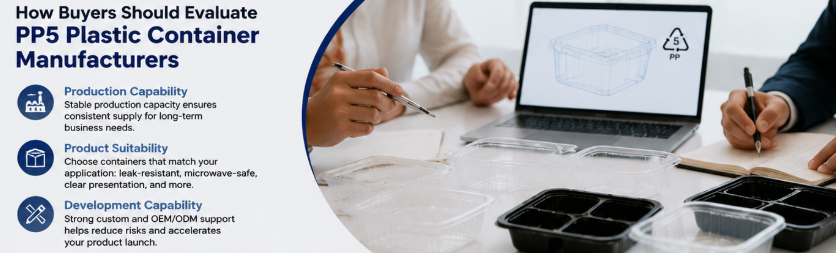
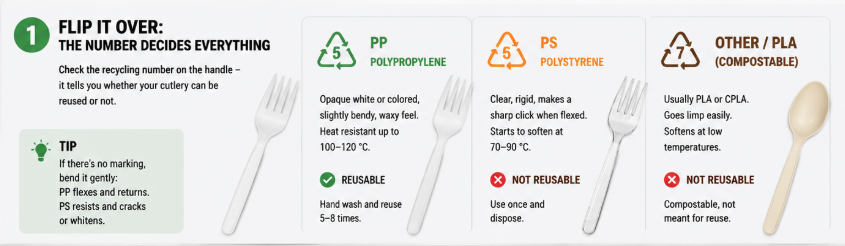
PET is attractive when transparency and cold-food presentation are important. PP becomes more interesting when the container needs greater heat tolerance or microwave compatibility. The exact performance still depends on the product design, thickness, formulation, and intended use, so buyers should request application-specific specifications rather than relying on the material name alone.
A custom plastic cereal bowl manufacturer for private label brands should be able to discuss those details before production, including bowl capacity, dimensions, wall thickness, lid fit, packaging configuration, and the conditions under which the product will be used.
How to Compare Plastic Cereal Bowl Supplier Quotes
When comparing quotations, look beyond the per-piece figure.
A $0.08 bowl and a $0.09 bowl may have very different landed costs once case quantity, lid pricing, pallet configuration, freight, minimum order quantity, and delivery terms are included. For imported products, duties and transportation can further change the final number.
Lead time deserves the same attention. A slightly cheaper supplier is not attractive if production delays force a distributor to hold extra safety stock or leave a restaurant chain without packaging.
For repeat purchasing, buyers should also ask whether the supplier can maintain the same dimensions and material specification across future production runs.
U.S. Supplier or Direct Factory?
Buying from a U.S. supplier can simplify communication, delivery, replenishment, and small-volume purchasing. It is often the sensible choice when the product is already standardized and available through domestic distribution.
Direct factory sourcing becomes more compelling when annual volume grows or when the buyer needs customization. A custom cereal bowl manufacturer for bulk packaging projects may be able to develop a dedicated shape, capacity, color, lid, or packaging configuration that distributors cannot offer.
The calculation should include tooling, MOQ, freight, quality control, compliance documentation, and lead time. Custom manufacturing is not automatically cheaper, but at sufficient volume it can provide much greater control over the final packaging.
Final Shortlist for Buyers
For standard disposable foodservice bowls, Dart, Pactiv Evergreen, Anchor Packaging, and Genpak are strong starting points. Supermarket and fresh-food buyers may find Inline Plastics more relevant, while sustainability-focused programs can investigate Sabert.
Carlisle is the more logical direction for reusable commercial tableware. Restaurantware and WebstaurantStore make sense when immediate access to standard products matters more than customization.
For buyers who have already defined their required capacity, material, lid, dimensions, and annual volume, however, the next step may be different: compare those requirements directly with a manufacturing partner rather than limiting the search to domestic distributors.
Looking for a Custom Plastic Cereal Bowl Manufacturer?
If your requirement goes beyond an off-the-shelf bowl, direct manufacturer sourcing can open up more options for capacity, dimensions, materials, colors, lids, packaging, and private-label production.
The right supplier should not simply quote a unit price. It should help you determine whether the proposed bowl structure matches your food application, shipping conditions, filling process, storage requirements, and expected order volume.
For wholesale buyers building a long-term packaging line, that difference can matter far more than choosing the lowest initial quotation.