Greaseproof paper looks like an easy material to classify. It is paper, so it is tempting to assume that it can simply go into the paper recycling bin after use. For food packaging buyers, however, the answer is not quite that simple.
A paper used for bakery products, sandwiches, fried food, or food liners can have a very different end-of-life outcome depending on how its grease resistance is achieved, whether additional barrier materials are present, and how heavily the paper is contaminated after use.
So, if you are sourcing greaseproof paper for commercial food packaging, the more useful question is not just “Is greaseproof paper recyclable?” It is “Will this specific paper structure be accepted by the recycling system in my target market?”
Recyclability Starts With the Paper Structure

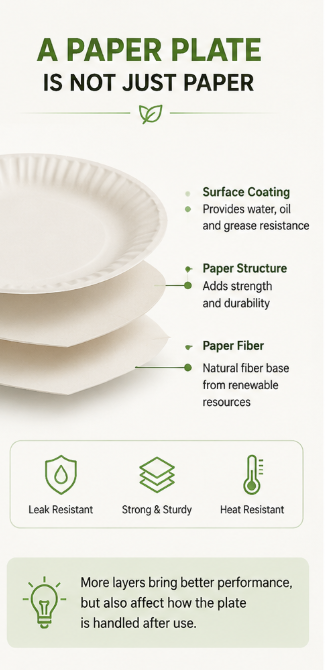
Not every product sold as greaseproof paper has exactly the same construction. Some products rely mainly on the characteristics of the paper itself and its fiber structure to resist oil penetration. Others may use additional treatments or coatings to improve barrier performance.
That difference matters when recycling becomes part of the purchasing decision.
A buyer working with a custom greaseproof paper manufacturer should therefore ask how the grease resistance is achieved rather than accepting a simple recyclable or non-recyclable label. If the product contains a plastic film or a substantial non-fiber barrier layer, it may behave differently from a paper-based greaseproof product during the recycling process.
This is particularly important when the packaging is being marketed as a paper-based alternative to plastic. “Paper” describes the main material, but it does not necessarily tell you everything about the finished structure.
Why the Greaseproof Treatment Matters
Grease resistance is useful because ordinary paper can quickly absorb oil from food. A greaseproof treatment helps the packaging maintain its appearance and structure while reducing oil penetration.
The trade-off is that buyers need to understand what has been added or changed to achieve that performance.
When evaluating an OEM greaseproof paper supplier, ask whether the grease resistance comes from the paper structure, surface treatment, coating, or a combination of these. The answer gives you a much better starting point for assessing recyclability than the product name alone.
It also helps avoid a common sourcing mistake: choosing a paper based entirely on its appearance and grease resistance, then discovering later that its construction does not fit the recycling requirements of the market where it will be used.
Used Greaseproof Paper Is a Different Story

Even when a greaseproof paper product is technically recyclable, that does not mean every used sheet will actually be recycled.
Food contamination can change the situation considerably.
Consider a bakery liner that has only been used under a dry pastry. Its condition may be very different from a sheet wrapped around a greasy burger or fried food. Oil, food residue, moisture, and attached food particles can all affect what happens when the packaging enters a waste stream.
This distinction is often overlooked when companies evaluate sustainable packaging.
A greaseproof paper factory for foodservice packaging may produce a paper that is compatible with paper recycling, but the finished packaging still needs to be considered in its actual application. A material specification cannot completely predict what happens after the paper has been in contact with food.
For buyers, this means recyclability should be evaluated at two stages: the material before use and the packaging after use.
“Recyclable” Does Not Mean “Accepted Everywhere”

Another issue is the difference between being recyclable in principle and being accepted by a local collection system.
Recycling infrastructure is not identical from one market to another. Paper products that are accepted in one municipal recycling program may have different requirements elsewhere. Some systems are more sensitive to food contamination, while others have specific rules for coated or treated paper products.
That makes the target market important from the beginning of the sourcing process.
If you are purchasing from a greaseproof paper manufacturer for bakery packaging, for example, the right specification may depend on whether the finished product will be sold in the United States, the UK, the EU, Australia, or another market.
A supplier's statement that a product is “recyclable” should therefore be treated as the beginning of the conversation, not the end of it.
Ask what standard, recycling stream, or market the claim refers to. More importantly, find out whether the claim applies to the unused paper itself or to the finished packaging after normal food use.
What Should Buyers Ask Their Supplier?

A practical sourcing conversation should go beyond price, GSM, sheet size, and printing.
When working with a custom greaseproof paper supplier for food packaging, ask first about the material composition and the method used to create grease resistance. This can reveal whether the product is primarily fiber-based or contains additional barrier materials.
Next, ask for technical documentation that describes the paper structure and relevant compliance information. If recyclability is an important selling point, request supporting evidence rather than relying on a sentence in a product catalog.
For companies purchasing large quantities from a greaseproof paper wholesale manufacturer, this step becomes even more important. A material change that seems minor at the sampling stage can affect packaging claims, disposal instructions, and customer expectations after the product has already entered the market.
It is also worth discussing the intended food application with the supplier. Grease resistance required for a pastry liner may not be the same as that required for oily takeaway food. Over-specifying the barrier can increase cost or introduce unnecessary material complexity, while under-specifying it can lead to leakage, staining, or poor package performance.
When Greaseproof Paper Is a Good Choice
Greaseproof paper can still be a strong option when a business wants a paper-based food packaging solution with good grease resistance and a suitable end-of-life pathway.
It makes particular sense when the packaging application does not demand an extremely high moisture or liquid barrier and when the target market has a recycling infrastructure that can handle the selected paper structure.
For a private label greaseproof paper manufacturer, this also creates an opportunity to design the specification around the actual application instead of simply selecting the thickest or most heavily treated paper available.
That approach can help balance grease resistance, printability, food-contact requirements, packaging performance, and end-of-life considerations.
When Another Material May Make More Sense
Greaseproof paper is not automatically the best answer for every food application.
Products exposed to large amounts of oil, liquid, steam, or prolonged moisture may require a stronger barrier. In those situations, a buyer may need to consider a different paper construction or another packaging material altogether.
The important point is not to choose a material because it has the most attractive sustainability claim. A greaseproof paper supplier for takeaway food packaging should be able to discuss the relationship between barrier performance and disposal requirements so that the specification reflects the real use case.
A package that performs poorly and has to be replaced, over-engineered, or discarded prematurely is not necessarily a better packaging solution simply because its base material is paper.
Avoid Making an Overly Broad Recycling Claim
For brands and distributors, the wording used on packaging deserves attention.
“Recyclable” can sound straightforward, but the actual situation may depend on the packaging structure, contamination, collection system, and local processing capability.
Before putting a recyclability claim on a product, a greaseproof paper factory for private label packaging should be able to provide enough material information for the buyer to assess whether the claim is appropriate for the intended market.
This is especially relevant for companies selling internationally. A claim that seems reasonable in one market should not automatically be carried over to another without checking local requirements.
The Better Question to Ask

So, is greaseproof paper recyclable?
Sometimes—but that answer is not enough for a commercial purchasing decision.
The better approach is to look at the complete chain: what the paper is made from, how grease resistance is achieved, whether additional barrier layers are present, how the packaging is used, how contaminated it becomes, and whether the local recycling system accepts that type of paper.
For buyers working with a greaseproof paper manufacturer for wholesale foodservice packaging, those questions are much more useful than simply asking for a “recyclable” product.
In the end, the best greaseproof paper specification is not necessarily the one with the strongest environmental claim. It is the one that delivers the required food-packaging performance while fitting the recycling and disposal realities of the market where it will actually be used.